Showing: 1 - 8 of 8 RESULTS

Kashke Bademjan (Persian Aubergine Dip with Kashk)

Deliciously moreish, you only need a few ingredients to make this traditional garlicky Persian aubergine dip. A great addition to a mezze or as an appetiser.

What is Kashke Bedemjan?

This dish literally translates as ‘kashk and aubergine.’ It is a dip make with aubergine, which is cooked and flavoured with turmeric, onion and lots of garlic. Kashk is mixed through to give a slightly tart and creamy flavour. The dip is then topped with mint oil, kashk, crushed walnuts and cispy onions. It is a unique tasting dip with its rich and earthy tones.

What is Kashk?

Kashk is a range of fermented dairy products used in Iranian, Turkish, Balkan and Arab cuisines. Kashk has been a staple in the Persian diet for thousands of years.

Persian “kashk” is a fermented / preserved food that comes in liquid or dried form. It is traditionally made with the whey left over from cheese-making. It is used in dishes like Ash Reshteh (a herb, lentil, bean and noodle soup) and Kaleh Joosh (a soup made with walnuts, onions and mint). In its dried form it needs to be soaked and softened before it can be used in cooking.

The taste of kashk is distinctive and almost indescribable. It is well worth purchasing and not substituting with an alternative, such as yoghurt. Kashk provides a sour, salty, creamy and slightly cheesy flavour to the dishes it is added to.

When I was growing up, my maman used dried balls of kashk which she would soak in a bowl before adding it to a recipe. Apparently before she knew she was pregnant with my sister, a relative surmised she was as she saw her sucking on kashk like they were sweets! Nowadays, you can buy kashk in liquid form in jars from Middle-Eastern food shops or online. I use Kambiz Kashk and buy it online here or by popping into a local Middle-Eastern supermarket.

Variation to the Recipe Below

I fry the aubergines, as do most Iranians when they cook this dish. But you can oven roast the aubergine, if you prefer. Brush them with a little oil and roast for 30 – 40 minutes or until they are cooked through and soft (oven temp – 180°C (fan) / 200°C (conventional) / Gas Mark 6). If you roast your aubergine, you will need to add a little oil to your frying pan to cook the garlic step 5 and 6 below).

How to Serve this Dish

In our family we tend to serve it as a starter with flatbread at our larger family gatherings. At home, as a family of 3, we eat it as a main course with a hearty salad like tabbouleh, Nan-e Barbari (Persian Flatbread) and some fruit for afters as pictured.

Other Delicious Dips

Check out these other great dip recipes.


Kashke Bademjan

Aubergine dip with kashk
Prep Time30 minutes
Cook Time1 hour
Total Time1 hour 30 minutes
Course: Main Course, Appetiser
Cuisine: Persian, Iranian
Keyword: kashk-e bademjoon, kashke bademjan
Servings: 4
Author: Mersedeh Prewer

Ingredients

  • 1 cup Vegetable oil (plus more if required)
  • 3 large aubergines
  • 2 large onions (sliced very finely)
  • 5 cloves garlic (crushed or minced)
  • 1 tsp turmeric
  • 250 ml water
  • 2 tbsp kashk (plus a little more diluted in a little water for the garnish / topping design)
  • 1 tsp dried mint
  • 1 tbsp ground walnuts (for garnish)
  • 1/8 tsp ground saffron (bloomed in 2 tsp of water - for decorating the dish - optional)
  • Salt and pepper (to taste)

Instructions

Prepare the Aubergines

  • Peel the aubergines and cut them lengthwise (approximately 1 inch thick slices). Salt them and leave them in a colander for 30 minutes to remove some of the water content.

Make the Mint Oil & Crispy Onions

  • In the meantime, take 2 tsp vegetable oil and heat in a small pan on low heat with 1/2 tsp dried mint. Let it infuse on low heat for 10 seconds and then remove and leave until ready to garnish the dish. Be careful not to burn the mint.
  • Place a large frying pan on medium-low heat. Add 2 to 3 tbsp oil and add onions with a pinch of salt. Fry them gently until they caramelise and start to turn a little crispy. Be careful not to burn them otherwise they will be bitter. Once cooked, remove them and place them on an absorbent paper towel for use later.

Cook the Aubergines

  • Add half of the remaining oil to the frying pan and fry aubergines in batches until they are golden brown. Top up the oil in the pan, if required. Using the back of a fork press down on the aubergine while it is frying to aid the process. When cooked, remove the aubergines from the pan and place them on an absorbent paper towel on a plate for use later.
  • You can re-use the pan you fried the aubergines in for cooking the next stages but if you do, make sure you give it a wash. Place pan on medium-low heat. Some oil will have formed on the top of your aubergine, drip this into the pan - just enough to sauté the garlic.
  • Add the garlic and let it sauté for only 10 seconds. Then add aubergines and stir until it has mixed with all the garlic. Add turmeric and 125 ml of water and stir. Then mash the aubergines using a fork or potato masher. Add the rest of the water (125ml) and mash and stir further until it has a stringy texture.
  • Add 1/2 tsp dried mint, half of the onions (reserve some of the fried onions for the topping / garnish) and 2 tbsp kashk. Mix until everything is fully incorporated. Taste the mixture and then season further with salt (if required) and pepper. Let mixture gently heat through and stir occasionally. The dish only needs to be warm for serving.

Garnish & Serve the Dish

  • Turn heat off and spoon aubergine mixture into a serving dish. Spoon off any extra oil which may have formed on top before garnishing. Garnish with fried onions, diluted kashk, saffron water (you can mix some of the kashk with the saffron water to make a yellow kashk as I have in the picture above), mint oil and ground walnuts in any design you like. Serve with flatbreads and salad.
Kateh-e Estamboli (Persian Easy Cook Tomato Rice)

A simple and comforting vegetarian dish made by steaming rice layered with an aromatic tomato, onion and potato mixture. A great mid-week meal option when served with fried eggs and yoghurt.

What is Kateh-e Estamboli?

This recipe is an adaptation of the dish ‘Estamboli Polo.’ A rice dish that comes in many different iterations. Some do a vegetarian version. Others include meat. Some include green beans. Some don’t use potatoes. My version is a vegetarian version with onions, potatoes and tomatoes layered through the rice. In addition, as found in most Persian cooking, turmeric and saffron provide the rich flavour to this rice dish. I have added some extras to my version including garlic, parsley and coriander for extra flavour.

I wanted a quick version of this dish for my family. Instead of using the traditional method of cooking Estamboli Polo by draining the rice after par-boiling, I used the kateh method. Simply boiling and steaming the rice without draining the water. The resulting rice is delicious, quick and involves less washing up. Also it still creates tahdig – the crispy rice at the bottom of the pot.

How to Serve this Dish

Perfect when accompanied with a salad like Salad Shirazi, or Maast O’Khiar (Persian yoghurt, mint and cucumber dip), or torshi and/or fried eggs.

How to Store Leftovers

Make sure the rice has completely cooled down, then store in an airtight container in the fridge up to 5 days.


Kateh-e Estamboli

An easy-cook vegetarian rice with potatoes, tomatoes, onions
Prep Time15 minutes
Cook Time1 hour 15 minutes
Total Time1 hour 30 minutes
Course: Side Dish, Rice Dish, Accompaniment
Cuisine: Persian, Iranian
Keyword: vegetarian, vegan option
Servings: 4
Author: Mersedeh Prewer

Ingredients

  • 2 tbsp vegetable oil
  • 200 g potatoes (peeled and diced into small cubes)
  • 1 medium onion (finely diced)
  • 2 cloves garlic (crushed) (optional)
  • 1 tsp turmeric
  • 1 tbsp tomato purée
  • 350 g fresh tomatoes (chopped)
  • 1/8 tsp ground saffron (bloomed in 2 tbsp of water)
  • 15 g each of fresh chopped parsley and coriander (optional)
  • Salt and pepper (to season potato and tomato mixture)
  • 2 cups white long grain basmati rice (approximately 400g of rice)
  • 650 ml vegetable stock
  • 1 tsp salt (for the rice)
  • 1 tbsp butter / ghee / vegetable oil

Instructions

  • Gently wash rice in cold water until water runs clear. Place in a bowl and fill with cold water to 2 inches above the rice. Let the rice soak for a minimum of 30 mins (preferably overnight).
  • Take a saucepan and add 2 tbsp vegetable oil and place on a medium / high heat. Add diced potatoes and fry until they turn golden and a little crispy. Then add onions and fry until they soften and turn translucent.
  • Then add the garlic, turmeric and tomato purée and stir until evenly distributed in the mixture. Add chopped fresh tomatoes, the bloomed saffron, fresh herbs and seasoning. Stir and cook for a few minutes. Turn heat off and leave mixture until you are ready to add to rice.
  • Drain and put rice in a saucepan and add vegetable stock and 1 tsp salt (I use a standard UK 20 cm saucepan with a glass lid, 2.5 litre capacity).
  • Put the saucepan on high heat until water starts to boil. Once water comes up to the boil, turn heat to medium and add butter /ghee / oil and stir gently to mix. 
  • Once you start to see holes forming in the rice (as the water is evaporating), take the temperature down to the lowest setting. Take potato and tomato mixture and pour into the rice. Gently stir into the rice mix whilst trying to avoid breaking the rice grains.
  • Take a clean tea towel and wrap the lid of the saucepan, making sure it is not a fire hazard. Place the lid on the saucepan. The tea towel will help the steaming process and soak up the water, preventing it from falling back into the rice and making it mushy. Leave the rice cooking for 45 mins or more. The longer you leave it, the better the crispy layer that forms at the bottom of the pot (tahdig).
  • Once you have come to the end of the cooking time (45 mins or more with the lid on), turn off heat and dish up the rice on to your plates or serving dish. Plate up your tahdig as well. Serve with salad or yoghurt, and / or eggs.

Cherry and Pistachio Brownies

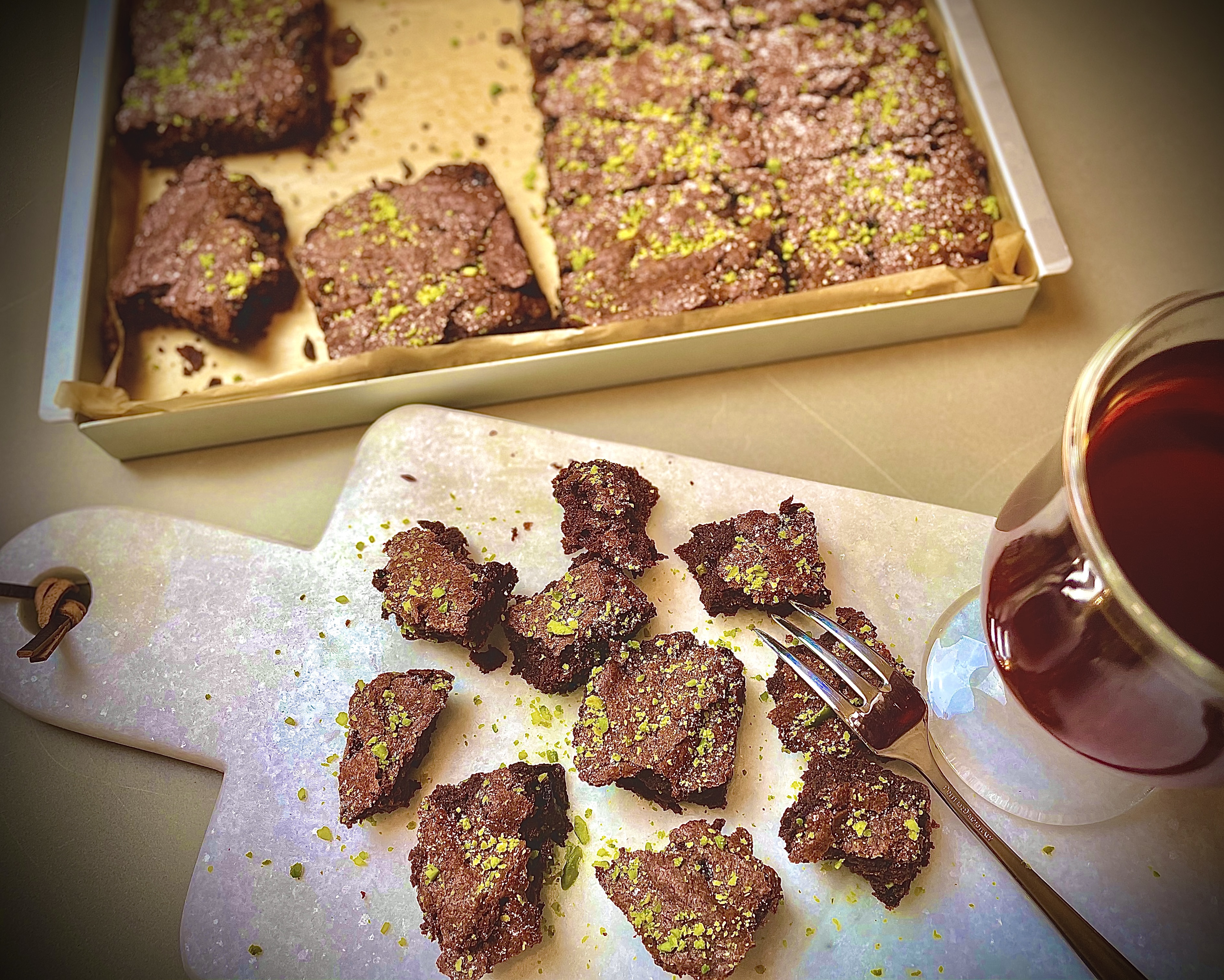
Indulgent and fudgey brownies made with luxardo cherries and pistachios. A lovely accompaniment to a cup of Persian chai (tea).

Cherry and Pistachio Brownies

This brownie recipe is one I created to add to the selection of tea-accompanying sweet treats for the chocolate lovers in my family. I have adapted a standard brownie recipe and added Luxardo Maraschino Cherries and fresh pistachios to add a little Persian touch to a familiar friend.

For those of you who have not come across Luxardo Maraschino Cherries, these are candied cherries soaked in Luxardo marasca cherry syrup. Often used by mixologists for their cocktails, replacing those bright red cocktail cherries, with a deep purple, slightly sour cherry. They are incredible in cocktails, but also an amazing addition to baking recipes or just being poured (with the syrup) over a vanilla ice cream. Using them in a brownie recipe adds to the gooey texture and balances the sweetness with a subtle sour note.

These brownies can be eaten as a dessert with cream or custard, should you fancy. I break mine down into little bites and enjoy them with a glass of hot Persian tea.

The Art of Making Tea

We Iranians love our tea (chai).  As far back as I can remember my maman has always had a samovar in her kitchen. Samovars are traditionally used to make tea. Originating in Russia, the samovar has spread through Russian culture to other parts of Europe and the Middle-East, including Iran. Samovars are typically crafted out of metal such as plain iron, copperp or polished brass. It usually consists of a body, base and chimney, steam vent and teapot. The body shape is usually like a barrel and the water is boiled in this section.

Many samovars have a ring-shaped attachment around the chimney to hold and heat a teapot filled with tea concentrate (tea leaves with water). The tea pot is placed on the chimney and is steamed by the boiling water in the body of the samovar. The tea is then poured into a glass and then hot water is poured in to dilute the tea to your liking i.e. the right colour. No milk is added to our tea. Modern samovars now look like giant kettles and are made using plastic.

Most Iranian households will have a special blend of tea leaves that they mix themselves from varieties such as Early Grey, Darjeeling and Assam. I remember my maman pouring all her chosen tea leaves into a large bowl and mixing them by hand with the aroma of the leaves filling the kitchen. That aroma is amplified into another level of joy while it steams in the little tea pot on the samovar. Then when the fragrance hits your nose before you take your first sip.

What Iranians Serve with Tea

Part of tea drinking ritual is having sugar cubes or sweet nibbles served alongside our tea. The veteran tea drinker will place a sugar cube in their mouth and sip their tea, with the cube breaking down and sweetening each intake of the beverage. Some of us like our tea with the well-known Middle-Eastern sweet treat, Baklava. With a table full of Persian treats ranging from biscuits to nougat, we are often spoiled for choice.

Despite the array of these Persian delights my heart always belongs to chocolate! Being born and brought up in the UK, chocolate was introduced to me at a young age and if it is on offer I always choose it first over other sweet treats. Whether it is the posh stuff that a Swiss-based relative has brought over as soghati (a gift from their travels) or the cheap stuff we gorged on as kids – I am not picky!

Other Sweet Delights

Check out some other sugary treats!


Cherry and Pistachio Brownies

Prep Time10 minutes
Cook Time35 minutes
Total Time45 minutes
Course: Dessert, Sweet Treats
Cuisine: Cross-cultural
Servings: 12 portions
Author: Mersedeh Prewer

Ingredients

  • 175 g unsalted butter (cut into cubes)
  • 200 g dark chocolate (good quality - 70%+ cocoa)
  • 325 g caster sugar
  • 130 g plain flour
  • 1/2 tsp sea salt
  • 3 free-range eggs
  • 125 g Luxardo Cherries (chopped) (plus 2 tbsp of the syrup)
  • 2 tbsp ground fresh pistachios (the pistachios do not need to be finely ground as you want some texture in the brownie mix) (plus extra to decorate)
  • 1 tsp icing sugar (to decorate)

Instructions

  • Preheat oven to 160°C (fan) / 180°C (conventional) / Gas mark 4. 
  • Line a baking tray (33cm x 23cm x 5cm) with baking paper / grease-proof paper.
  • Put chocolate and butter in a heatproof bowl over a saucepan of simmering water. Do not let the base of the bowl touch the water. Leave mixture to melt. Stir to ensure there are no lumps and the butter and chocolate are fully incorporated.
  • Remove from heat. Add sugar and stir until incorporated. Add flour and salt and stir until well incorporated. Stir in eggs and mix until smooth. The mixture will have a thick consistency.
  • Add chopped cherries, cherry syrup, ground pistachios and mix in. Spoon the mixture into the prepared baking tray.
  • Place tray in oven for about 30 to 35 mins. The brownies are done when they are flaky on top but still gooey in the middle. Be careful not to over-cook as the edges will become crunchy and hard.
  • Once baked, leave to cool before dusting with the icing sugar and sprinkling with ground pistachios.

Borani Laboo (Beetroot, Yoghurt and Feta Dip)

A delicious and vibrant pink Persian dip made with cooked beetroot, grated into yoghurt with crumbled feta and flavoured with garlic. Serve with flatbread as part of a Mezze offering or as a side to a Persian feast.

What is Borani?

Borani is an Iranian appetiser, which is a dip made with yoghurt. The most well-know of these dips are Borani Esfenaj (spinach, garlic and yoghurt dip) and Borani Laboo. But you can make borani with any vegetable you want including roasted aubergines and courgettes.

Borani Laboo Ingredients

This dip is made using cooked beetroot, Greek yoghurt, garlic, nigella seeds, dried mint, feta, toasted argan oil and red wine vinegar. My go-to Greek Yoghurt is Total by Fage – 5%. It is thick and creamy which is perfect for Persian dips.

Beetroot is of exceptional nutritional value with it being an excellent source of folic acid and a very good source of fibre, manganese and potassium. But it can taste too earthy to some or as my husband puts it – ‘It’s like eating soil.’ In fact, beetroot isn’t the most loved vegetable in my family unless I make it into this dip. Then it gets devoured at a rate of knots with me barely getting a look in! The combination of ingredients brings out the best in beetroot.

I recommend buying raw beetroot and boiling them yourself. But if you do want to use pre-boiled ones then avoid the ones cooked in vinegar. Otherwise your borani will be too tart. You can make a vegan version by substituting the yoghurt and feta below with a plant-based alternative.

How to Serve Borani Laboo

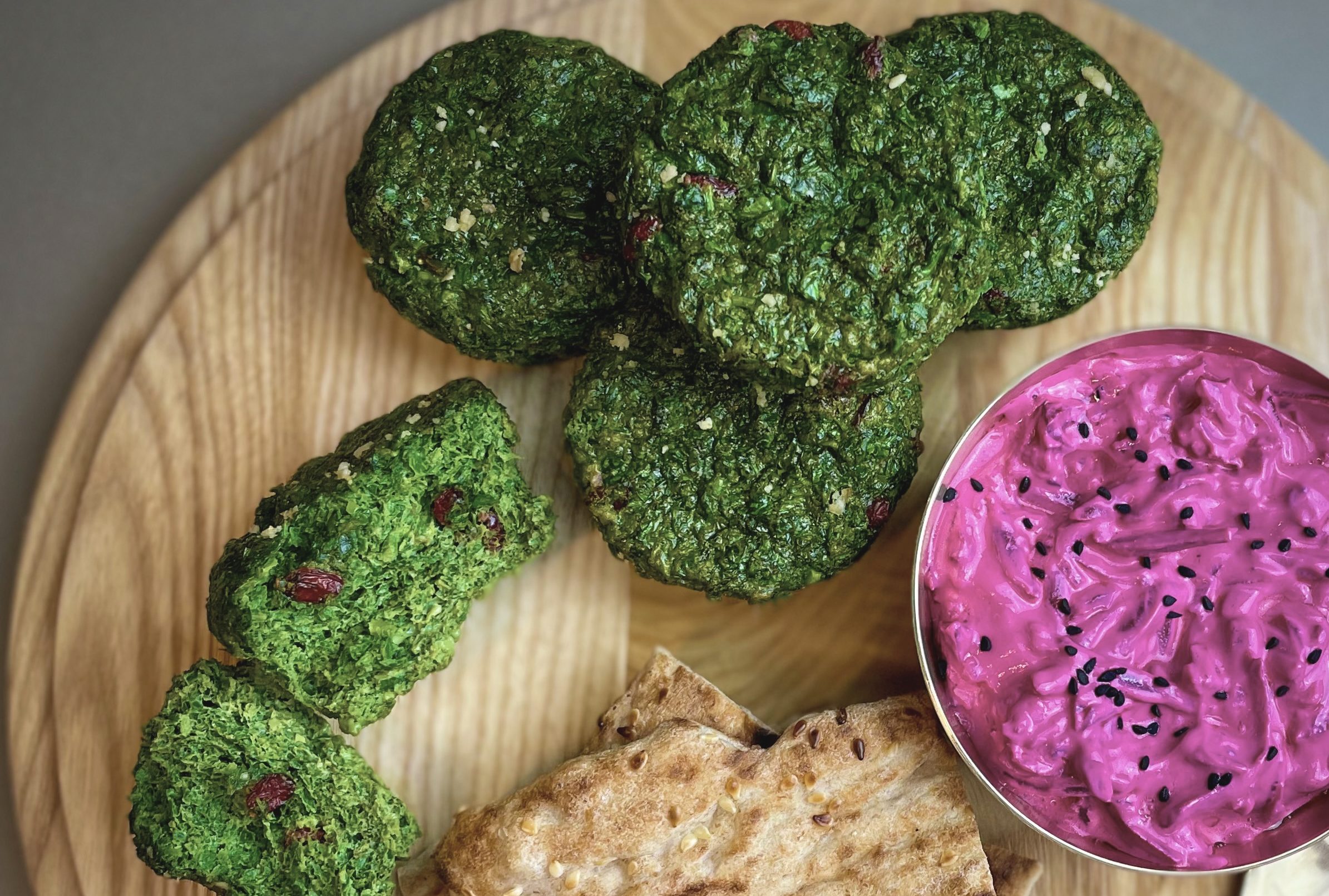
The recipe for Borani Laboo below is an add-on recipe to my Kuku Sabzi post (seen pictured around the borani dip bowl). You can, of course, make and eat this dip without Kuku Sabzi. It is delicious with crisps or flatbread and makes a great addition to a mezze-style meal. The colour of the borani is stunning and has an eye-catching presence on your table of appetisers or other Persian delights.

Storing Leftovers

Keep leftovers in an airtight container in the fridge and this dip can last up to 5 days.


Borani Laboo

Betroot Borani
Prep Time10 minutes
Cook Time40 minutes
Total Time50 minutes
Course: Dip, Appetiser
Cuisine: Persian, Iranian
Keyword: vegetarian, beetroot, yoghurt, vegan option
Servings: 4
Author: Mersedeh Prewer

Ingredients

  • 4 small raw beetroot
  • 5 tbsp Greek yoghurt (heaped tablespoon)
  • 1 clove garlic (crushed)
  • 50 g feta crumbled
  • 1 tsp dried mint
  • 1 tbsp red wine vinegar
  • 1 tbsp toasted argan oil or olive oil (plus extra for drizzling)
  • 1 tbsp nigella seeds (plus extra for sprinkling on top)
  • Salt and pepper (to taste)

Instructions

  • Wash beetroot, put in a pan (unpeeled), cover with water and bring to the boil. Cook until tender (approx. 40 mins), topping up water, if necessary. The beetroot is ready when a sharp knife goes through easily.
  • Drain and leave to cool. Peel beetroot and grate using the coarse side of a grater.
  • Transfer to a bowl, add yoghurt, garlic, oil, mint, vinegar, feta, nigella seeds, salt and pepper and mix well.
  • Top with a sprinkling of nigella seeds and a drizzle of oil. Serve with Flatbread.

Kuku Sabzi (Persian Herb Frittata )

A traditional Persian frittata dish, densely packed with fresh herbs with a crunch provided from walnuts and a little tartness from barberries in each mouthful. This delightful dish is commonly eaten during Persian New Year celebrations (Norooz).

What is Kuku Sabzi?

Kuku Sabzi is a frittata-style dish traditionally made with eggs, turmeric, coriander, parsley, dill, chives, barberries and crushed walnuts. It is usually fried and then sliced into triangles. You can serve it either hot or cold as a starter, side dish or a main course. It can be accompanied with bread or rice and either yogurt or salad.

The key difference between a kuku and a frittata is the egg to vegetable ratio, with the kuku favouring the latter.

Kuku Sabzi and Norooz

Kuku Sabzi is eaten during the celebrations for Persian New Year (‘Norooz’). Norooz is the day of the vernal equinox, and marks the beginning of spring in the Northern Hemisphere. It usually falls on 21 March each year. This festival dates back over 3000 years and is rooted in the ancient Persian religion of Zoroastrianism.

It is estimated that Norooz is celebrated by over 300 million people including communities in Afghanistan, the Kurdish regions of Iraq and Turkey, Parsis in India, and their related diaspora around the world.

The herbs in Kuku Sabzi symbolise rebirth, and the eggs symbolise fertility. We serve it alongside Sabzi Polo ba Mahi (Persian herbed rice and fish).

How this Recipe Differs

  • This version of Kuku Sabzi is baked, which makes for a healthier dish.
  • British chives are not as spicy as Iranian chives so replace these with the green ends of spring onions.
  • The addition of baby spinach leaves results in a bright green kuku.

As with the traditional recipe, dried barberries are added to the kuku mixture. This gives a tart burst of flavour from the berries with each bite. You can buy barberries from most Middle-Eastern food shops or, alternatively, buy them online. I also add coarsely ground walnuts to the mixture to give a little crunch to the kuku.

Some Tips for cooking Kuku Sabzi

To prepare the herbs, wash them and remove the toughest parts of the stems. There is no need to remove all the leaves from all the stems if you have a food-processor to chop the herbs finely for you. Dill and parsley will require a bit more time removing the tough stems unlike coriander which you can usually chuck in and blitz.

Silicon baking moulds are excellent for baking kuku but if you don’t have any, use a standard muffin tin but make sure you grease and line it properly.

How to serve Kuku Sabzi

Serve alongside vibrant Beetroot Borani (yoghurt and beetroot dip) as pictured. You can find the recipe for this delicious dip here.


Kuku Sabzi Instagram Reel


https://www.instagram.com/reel/CbRvGrjI-84/?utm_source=ig_web_copy_link


Kuku Sabzi

Persian herb frittata
Prep Time10 minutes
Cook Time25 minutes
Total Time35 minutes
Course: Main Course, Appetiser
Cuisine: Persian, Iranian
Keyword: vegetarian, egg recipes
Servings: 12 (mini kuku)
Author: Mersedeh Prewer

Ingredients

  • 100 g fresh parsley (washed and tough stems removed)
  • 100 g fresh coriander (washed and tough stems removed)
  • 100 g fresh dill (washed and tough stems removed)
  • 5 spring onions (green ends only)
  • 1 handful baby spinach leaves
  • 3 tbsp olive oil (1 tbsp for greasing your muffin tin, 2 tbsp for the kuku mixture)
  • 1/2 tsp turmeric
  • 2 cloves garlic
  • Zest of 1 lime
  • 6 large free range eggs
  • Salt and pepper (to taste)
  • 1 tbsp self-raising flour (heaped tbsp)
  • 1 tbsp dried barberries (optional)
  • 1 tbsp ground walnuts (to garnish - optional)

Instructions

  • Pre-heat oven to 160°C (fan) / 180°C (conventional) / Gas Mark 4.
  • Take a 12-hole muffin tin, grease (using 1 tbsp olive oil) and line holes with baking paper. Brush a little olive oil into each recess after lining and leave to one side until ready to use.
  • Put herbs, spinach and spring onion ends into food processor and pulse until the herbs are finely chopped. Then add eggs, turmeric, garlic, lime zest, olive oil, self-raising flour, salt and pepper and pulse food processor until fully incorporated.
  • Add barberries and coarsely chopped walnuts (if using) to the mixture and stir.
  • Take muffin tin and spoon the mixture evenly between the 12 holes.
  • Place in oven for 25 mins. To check if  the kuku are done, use a thin skewer / tip of a knife to check one by gently poking to the bottom. It should come out clean.
  • Serve warm or cold, sprinkled with ground walnuts and barberries alongside a salad, dips and bread as part of a mezze-style meal.


Kuku Sibzamini ba Laboo (Potato & Beetroot Mini Frittatas)

These Persian mini frittatas made with potatoes, beetroot and feta are full of flavour and incredibly easy to make. Serve either warm or cold with flatbread and yoghurt as part of a mezze platter.

What is Kuku?

Kuku is a Persian frittata-style dish. Usually vegetarian, it is made with beaten eggs, herbs or vegetables folded in. The main difference between kuku and its western counterparts is the ratio of egg to vegetables, with kuku favouring the latter.

Types of Kuku

The two most well known kuku recipes are Kuku Sabzi (made with herbs, barberries and walnuts); and Kuku Sibzamini (made with potatoes). We also have Kuku Kadoo (made with courgettes). There are no hard and fast rules about what you should put in your kuku. I have made ones with curried mushrooms; kale and red pepper; cheese and tomatoes; and the list goes on.

What is in Kuku Sibzamini ba Laboo?

The traditional Kuku Sibzamini recipe is made using mashed potatoes, grated onion, turmeric, saffron, dried mint and egg. The mixture is then made into patties and fried.

This recipe is my variation to Kuku Sibzamini. I have added beetroot, garlic and feta to the recipe. The resulting kuku has a vibrant colour and delicious depth to the flavour. I also bake the kuku instead of frying.

Always use fresh and good quality ingredients. Make sure the feta you use is block feta in brine and not crumbled. My favourite brand is Aytac.

How to Serve Kuku Sibzamini ba Laboo

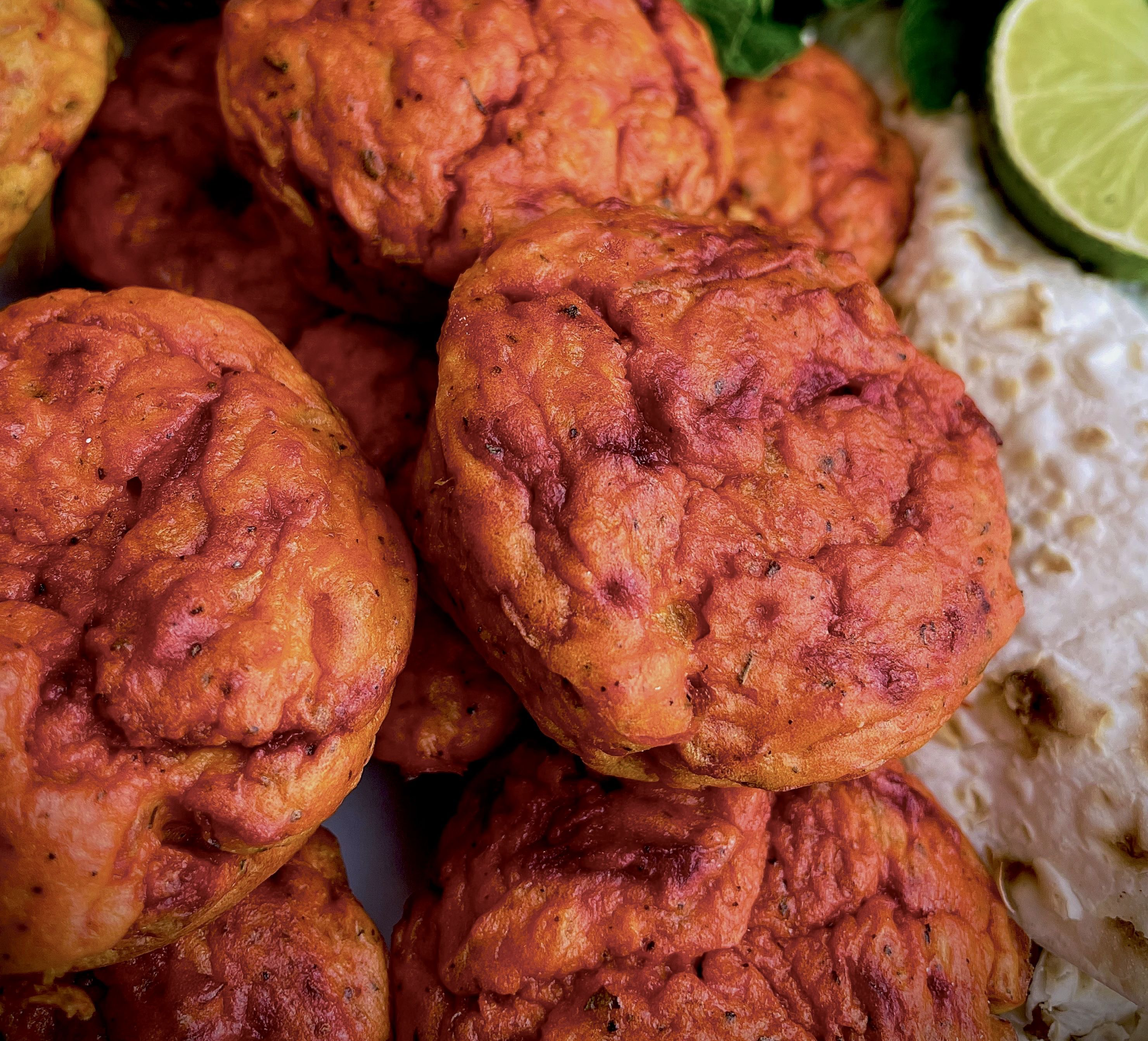
It is a great addition to a mezze platter or a sandwich filler. You can serve it either hot or cold; as a starter, side dish or a main course. Serve kuku with flatbread, yoghurt and/or salad. The picture below is one of our kuku platters.


Kuku Sibzamini ba Laboo

Potato & Beetroot Mini Frittatas
Prep Time15 minutes
Cook Time45 minutes
Total Time1 hour
Course: Main Course, Appetiser
Cuisine: Persian, Iranian
Keyword: vegetarian, egg recipes
Servings: 12 (mini kuku)
Author: Mersedeh Prewer

Ingredients

  • 3 tbsp olive oil (1 tbsp for greasing the muffin tin and 2 tbsp for the kuku mixture)
  • 500 to 600 g potatoes (peeled, boiled and mashed - use potatoes suitable for mashing such as Desiree or Maris Piper)
  • 1 medium / large beetroot (boiled, peeled and grated with excess water squeezed out)
  • 80 g feta or equivalent (crumbled or cut into small chunks)
  • 1 small / medium onion (grated with excess liquid squeezed out)
  • 2 cloves garlic (minced)
  • 1 to 2 tsp dried mint
  • 1 tsp turmeric
  • 4 large free-range eggs
  • Salt and pepper (to taste)

Instructions

  • Pre-heat oven to 160°C (fan) / 180°C (conventional) / Gas Mark 4.
  • Take a 12-hole muffin tin, grease (using 1 tbsp of olive oil) and line holes with baking paper. Brush a little olive oil into each recess after lining and leave to one side until you are ready to use.
  • Mix all ingredients for the kuku (mashed potato, grated beetroot, grated onion, crumbled feta, garlic, mint, turmeric, eggs, remaining 2 tbsp olive oil, salt and pepper) in a mixing bowl.
  • Take muffin tin and spoon mixture evenly between the 12 holes.
  • Place in oven for 25 mins. To check if kuku are done, use a thin skewer / tip of a knife to check one by gently poking to the bottom. It should come out clean.
  • Serve warm or cold with salad, dips and flatbread as part of a mezze platter / meal.

Khoresh Beh ba Aloo (Persian Chicken & Quince Stew)

A seasonal stew made with slow cooked chicken, quince, sour plums and apricots. Deliciously sweet and sour and warming from the saffron and cinnamon aromatics.

What is Khoresh Beh ba Aloo?

Chicken is slow-cooked in a saffron and turmeric-infused sauce with apricots, sour plums and quince to give an amazing sweet and sour flavour.

This khoresh (stew) is not as well-known as other stews from Iran such as Ghormeh Sabzi (lamb stew with herbs and dried limes) or Fesenjoon (chicken stew with pomegranate molasses and walnuts). This is probably due to the hero ingredient of the stew – quince. Quince is in season between October and January in the UK and during these months I suspect most Iranian households (like my family) will try to cook this dish a few times before the season ends.

What is Quince?

Quince is the fruit from a deciduous tree. It has a similar appearance to a pear but the fruit is generally not eaten raw but processed. Many of you may be familiar with quince being used to flavour gin, eaten as a paste with cheese or made into jam.

For those of you new to quince, let me tell you about this lovely fruit. It is a member of the apple and pear family. It has a yellow, lumpy hard flesh with a bitter flavour when raw. Due to the unpalatable flavour when raw, quince is generally consumed after cooking. When cooked, quince becomes soft and dense and develops a sweet, slightly tart flavour with hints of apple, pear, and citrus. Quince can last up to several weeks if stored in a fridge.

Origins of this Dish

The best quince is grown in Esfahan in Iran and unsurprisingly the dish originates from this beautiful city. There are a few variations of this khoresh  with some cooking it with lamb; using tomato purée; adding lentils. The recipe I have shared below results in a sweet and sour stunning golden stew, an unusual colour by comparison to the other stews we Iranians cook.

Ingredients in Khoresh Beh ba Aloo

This dish is delightfully easy to cook with minimal preparation. The final dish is comforting and loved by adults and children alike, so it is a great family recipe.

  • Butter / Ghee and Vegetable Oil: to cook various elements of the stew such as the quince and onions.
  • Quince: available at most South Asian or Middle Eastern supermarkets when in season.
  • Chicken Thighs: skinless chicken thighs on the bone are the best cut for stews.
  • Onion: used as the basis of most stews including meat.
  • Turmeric, Saffron and Cinnamon: provides a warming and earthy flavour profile to the stew. The turmeric and saffron also provide the golden hue to the dish.
  • Water: the cooking liquid. Vegetable or chicken stock can also be used.
  • Corn flour: to thicken the stew.
  • Honey: to sweeten and balance the tartness of the quince and sour plums.
  • Dried Apricots: available in local supermarkets. Soak them before adding them to the stew.
  • Dried Bukhara Sour Plums: deliciously tart and will need to be soaked overnight before adding to the stew. You can buy them online or from most South Asian or Middle Eastern supermarkets.
  • Salt and Pepper: to season the dish.

How to Serve Khoresh Beh ba Aloo

Serve this khoresh with Chelow (Persian steamed rice) and Salad Shirazi. Alternatively, serve it with a parsley mash and steamed green vegetables or just eat it with crusty bread.


Khoresh Beh ba Aloo

Chicken stew with quince, sour plums and apricots
Prep Time10 minutes
Cook Time1 hour 20 minutes
Total Time1 hour 30 minutes
Course: Main Course
Cuisine: Persian, Iranian
Keyword: sour plums, chicken, quince, apricots
Servings: 4
Author: Mersedeh Prewer

Ingredients

  • 1 tbsp butter or ghee
  • 2 medium quince (halved, sliced 1.5 inch thick and with core taken out)
  • 3 tbsp vegetable oil
  • 8 chicken thighs or a whole large chicken (approx. 2 kg - quartered) (on the bone, skin removed)
  • 1 onion (finely diced)
  • 1/4 tsp turmeric
  • 1/4 tsp ground saffron (bloomed in 2 tbsp of water)
  • 1 cinnamon stick
  • 500 ml water
  • 1 heaped tsp corn flour (dissolved in 1 tsp of cold water)
  • 3 tbsp honey
  • 15 small dried apricots (soaked in hot water overnight)
  • 20 dried bukhara sour plums (soaked in hot water overnight)
  • Salt and pepper (to taste)

Instructions

  • Take a frying pan, add butter and place on medium-high heat. Once the butter has melted, fry quince until caramelised on each side. Place them on a plate and put to one side.
  • Season chicken. Add 1 tbsp oil to the same frying pan and seal the chicken. Then place on a plate and put to one side.
  • Take a large casserole dish with a lid (minimum 3.5 litre capacity). Add 2 tbsp of oil and place on a medium / high heat. Then add diced onions and fry until translucent.
  • Add turmeric and stir until evenly distributed. Add chicken thighs, then add water and bloomed saffron. Add the corn flour paste. Season sauce to taste. Add cinnamon stick.
  • Drain apricots and sour plums from the water they have soaked in and add to pan with honey. Stir gently and distribute the fruit evenly across pan.
  • Arrange quince in the saucepan. Quince cooks very quickly and can be quite mushy so arrange the quince so it partially rests on the thighs. Once the liquid starts to bubble, turn the heat down to low and place the lid on the pan. Let the stew simmer for 40 mins to 1 hr or until chicken is tender and falling off the bone. Prior to serving, taste the stew and season further if required.
  • Serve with chelow and Salad Shirazi; or mashed potatoes and some steamed green vegetables; or crusty bread.