Showing: 1 - 5 of 5 RESULTS

Persian-Style Dal with Persian Mixed Spice & Dried Limes

A deeply comforting dal cooked in a rich tomato sauce with warming spices. The combination of the dried limes and Persian mixed spice creates an incredible savoury dish. A great vegetarian dish to eat with rice and or flatbread.

I discovered a love for dal over the last ten years. My husband introduced me to the world of dal during one of our early dates. He is a big fan of Indian cuisine and always orders a dal dish to accompany his meal. I was reluctant at first but, after a spoonful, I fell in love with the creamy texture and the aromatics of the dish. I wanted to make a dal dish with a Persian twist so I started experimenting!

Ingredients in this Dish

This dish is made with yellow split peas (Channa Dal) using the holy trinity of Persian cooking – onion, turmeric and saffron. I also added other familiar flavours from our cuisine during the recipe development including limoo amani (dried lime), advieh (Persian mixed spice) and nigella seeds. The resulting dish is deliciously savoury, packing an umami punch and satisfying even the die-hard carnivore.

Limoo amani can be bought online or from most Middle-Eastern food shops. It adds a musky and citrusy flavour to the dish. Be careful when piercing a hole into the dried lime as you do not want the seeds to fall out while it is cooking as it can make the dish bitter – just a gentle shallow poke into the lime with the end of a sharp knife.

Advieh can also be bought from most Middle-Eastern food shops – I buy mine online from Freshly Spiced on  Etsy. The combination fo spices are nutmeg, rose petals, cardamom, cumin, black pepper, goriander, and cinnamon.

I like a little heat in my food so I add red chilli to my dal, but feel free to leave it out.

How to Serve This Dish

Serve it with roti or naan, rice if you want a hearty meal with fresh herbs, torshi or a yoghurt dip on the side such as Maast o’Moosir (yoghurt and Persian shallot dip) or Maast O’Khiar (Persian yoghurt and cucumber dip).

Leftovers

This dal dish will last in the fridge up to 5 says if kept in an airtight container. Always cool dishes completely before refridgerating.


Persian-Style Dal with Persian Mixed Spice & Dried Limes

Prep Time15 minutes
Cook Time1 hour
Total Time1 hour 15 minutes
Course: Main Course
Cuisine: Persian, Iranian, Fusion
Keyword: vegetarian, vegan option, dhal, dahl, daal
Servings: 4
Author: Mersedeh Prewer

Ingredients

For the dal

  • 250 g chana dal (split yellow lentils) (rinsed with water until it runs clear and left in a bowl of water to soak overnight)
  • 2 tbsp vegetable oil
  • 1 onion
  • 3 cloves garlic
  • 1 whole red chilli (finely chopped - please feel free leave out / reduce amount or deseed if you would prefer it less spicy)
  • 1 tsp coriander seeds
  • 1 tsp turmeric
  • 900 mls vegetable stock
  • 1 bay leaf
  • 1 to 2 limoo amani (dried lime)
  • 200 g fresh tomatoes (chopped)
  • 1/8 tsp ground saffron (bloomed in 2 tbsp of water)
  • Juice from half a fresh lime
  • Salt and pepper (to taste)

For the temper and garnish

  • 2 tbsp ghee (non dairy alternative, if vegan)
  • 1 tsp black mustard seeds
  • 1/4 tsp advieh (Persian mixed spice)
  • 1 tsp nigella seeds (to garnish)

Instructions

  • Blend onion and garlic into a paste in a food processor or equivalent.
  • Take a large saucepan and add 2 tbsp oil and place on medium-high heat. Add chilli and coriander seeds. Toast lightly for 30 seconds to release flavours. Be careful not to burn otherwise it will be bitter. Add onion and garlic paste to the pan and cook for 5 minutes. Add turmeric and cook for a couple of minutes.
  • Drain channa dal and rinse. Then add to the pan with stock, chopped tomatoes, bay leaf and bloomed saffron.
  • Pierce imoo amani 3 to 4 times around the lime gently with the tip of a sharp knife and add to the pan - only a shallow piercing is required. Bring to a boil, then turn the heat down, add a lid and let it simmer for 45 minutes.
  • When the channa dal has cooked, remove from heat and remove the bay leaf and limoo amani. Stir to break down. Squeeze some fresh lime juice and season to taste. Leave the mixture to thicken.
  • To make the temper, place a small frying pan on high heat. Add ghee and fry mustard seeds for 30 seconds. Turn heat off, add advieh and mix and then pour into the dal mixture and stir. Sprinkle nigella seeds to garnish.
  • Serve with chapatis or roti and/or rice with yoghurt or torshi.

Maast O’Moosir (Yoghurt & Persian Shallot Dip)

A relative of the garlic but milder and a little sweeter, moosir makes for an extraordinary and delicious dip. Perfect for dipping flatbread, crackers or crisps.

What is Maast O’ Moosir?

Maast O’Moosir is a yoghurt dip commonly served as an appetizer or accompaniment in Persian cuisine. You may have eaten this dip at a Persian restaurant as it is usually offered as part of our mezze-style appetiser platters.

Moosir is described in English as a Persian shallot and similar to a Solo or Elephant garlic. It has a flavour profile similar to garlic but slightly sweeter and softer in its spiciness. They grow wild in the foothills of the Zagros Mountains. Moosir have to be found and dug out of the earth – a similar process to truffles. It adds an amazingly distinctive flavour to dishes. You can buy moosir from most Middle-Eastern food shops or online. It is available in its dried form and needs to be rehydrated by soaking in water overnight.

How to Serve this Dip?

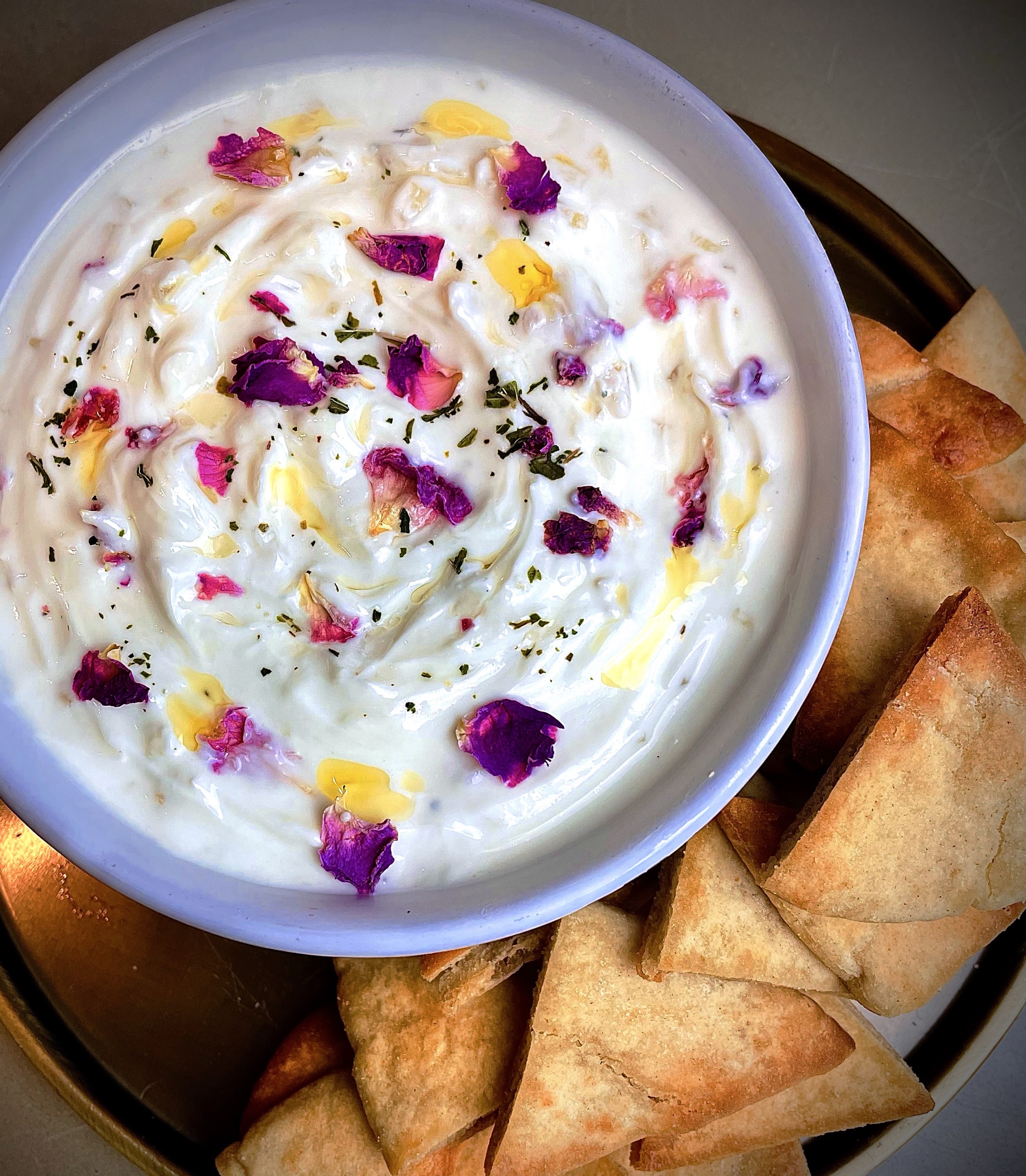
Serve this dip alongside Persian main meals. It goes particularly well with kababs (Persian or other cuisines). Alternatively serve it as a dip with crudités, or crisps, or flatbread. I have served the one in the picture above with pitta chips (cooked by drizzling olive oil and toasting in a hot oven). We Iranians often just sit with a bowl of this dip and crisps, happily dunking away and it is loved by the young and the wise in our families.

If you are going to make this dip, remember that you will need to soak the moosir over night and also to leave the dip, once made, for no less than an hour for the flavours to fully infuse and intensify.

Storing Maast O’Moosir

Store this dip in an airtight container and in the fridge up to 5 days.

Other Great Dip Recipes


Maast O'Moosir

Yoghurt dip with Persian shallot
Prep Time10 minutes
Resting time1 hour
Total Time1 hour 10 minutes
Course: Appetiser, Accompaniment
Cuisine: Persian, Iranian
Keyword: dip, musir
Servings: 4
Author: Mersedeh Prewer

Ingredients

  • 8 heaped tbsp Greek yoghurt (preferably 5% fat)
  • 8 discs dried moosir (rehydrated in water overnight)
  • Salt and pepper (to taste) (pepper is optional)
  • Drizzle of olive oil, dried rose petals and dried mint (to garnish - optional)

Instructions

  • Drain the rehydrated moosir discs and rinse. Mince finely with a sharp knife, discarding any tough parts.
  • Take a bowl, add yoghurt and the moosir. Stir, add salt and pepper (pepper is optional) to taste. Cover the bowl and leave in the fridge for the flavour of the moosir to permeate through the yoghurt (no less than 1 hour).
  • When you are ready to serve the Maast O'Moosir, decorate with dried rose petals, a sprinkle of dried mint and a drizzle of olive oil. Serve with pitta chips as pictured, crisps, vegetables or part of a mezze-style spread.

Sabzi Polo ba Mahi (Persian Herbed Rice with Salmon)

Last Updated on 24/02/2024 by Saffron & Herbs

Commonly served during Norooz, rice is layered and steamed with fresh herbs, saffron and garlic butter to create a delightfully aromatic dish. Grilled salmon, marinated in saffron, lemon, garlic and honey, is served alongside the Sabzi Polo to create the ultimate Persian meal.

A Special Dish

This dish is synonymous with Norooz – Persian New Year. Rice is steamed with saffron, garlic and chopped herbs. It is usually served with fish and Kuku Sabzi (a herb and egg frittata).

In Persian, Sabzirefers to herbs or vegetables; ‘Polorefers to the fact that the rice is cooked with another element mixed in, in this case the fresh herbs. The herbs used in Sabzi Polo vary, but typically include dill, coriander, parsley, Persian chives or the green ends of spring onions and in some cases fenugreek.

Iranians traditionally eat Sabzi Polo with a fried or smoked ‘mahi sefid’ (‘white fish’, the Caspian kutum or Caspian white fish which inhabits the Caspian Sea). It’s usually served with pickled garlic, other traditional pickles, Salad Shirazi and ‘Naranj’ – a tart and slightly bitter orange, which we squeeze over the fish and rice like a lemon adding a citrus note to the dish. You can buy Naranj from your local Middle-Eastern supermarket. Sainsbury’s also stock Naranj (bitter Seville marmalade oranges) during the season. Kuku Sabzi is also served alongside the rice on the day, a great alternative should fish not be your thing.

What are the Ingredients?

Below is my family recipe for Sabzi Polo. We tend to use a greater amount of fresh herbs compared to others. The herbs use in this recipe are fresh coriander, parsley and dill. In Iran chives are also used but the chives available in the UK are not as spicy so we replace these with the green ends of spring onions. The herbs and greens are mixed in while the rice is parboiling. After draining the rice, it is steamed with garlic butter drizzled over with a little saffron to add further aromatics to this dish.

The accompanying fish is grilled salmon marinated in a simple saffron, honey, garlic, lemon juice, olive oil infusion and smoked sea salt. You can make the Sabzi Polo with any fish you want, including smoked fish like many in Iran will eat on the day. You can pan fry, BBQ, grill, oven bake, poach or steam your fish if you prefer.

Your Choice of Tahdig

Due to the herbs, the tahdig (crispy rice formed at the bottom of the pot) will come out a dark green-brown as you can see in the first picture so do not panic when you flip the crispy stuff out – it’s meant to be that dark!

However, should you prefer you can prepare the dish with a saffron layer of Tahdig as you can see in the pictures above and below. All you need to do is parboil the rice without adding the herbs, drain it and then take 2 cups of rice and add to a little saffron water (1/4 teaspoon ground saffron bloomed in 3 tablespoons water). Mix the rice until fully coated and then line the bottom of the pan, following the addition of the oil/butter, as set out at the step entitled ‘Prepare the Tahdig Layer’ below. Then pat it down and layer the cooked rice with the fresh herbs and the garlic butter layer by layer on top.

You can also have potato or bread tahdig as an alternative. Just replace the rice layer with slices of potato or flatbread.

Serving and Storing Sabzi Polo Ba Mahi

Serve this dish alongside all or one of the following.

  • Salad Shirazi (Persian chopped tomato, cucumber and red onion salad dressed with lime, olive oil and mint).
  • Borani Laboo (Persian beetroot and yoghurt dip).
  • Maast O’Moosir (yoghurt and Persian shallot dip).
Storing Leftovers

Store in an airtight container, once cooled down, and in the fridge. The rice will last up to 5 days. The salmon will last up to 3 days. you can reheat the rice and salmon in a microwave. Or you can reheat the rice in a saucepan. Remember to add a tablespoon or so of water to rehydrate the rice if reheating. The salmon can also be reheated in a medium oven.

Norooz – Persian New Year and the First Day of Spring (Northern Hemisphere)

Norooz is the day of the vernal equinox and marks the beginning of spring in the Northern Hemisphere. It marks the first day of the first month of the Iranian calendar (Farvardin). The moment the Sun crosses the celestial equator and equalises night and day is calculated exactly every year. Families gather together to observe the rituals. Due to this calculation, the day Persian New Year falls upon can vary but generally it is either on the 20th or 21st March. The Persian name translated means ‘New Day.’

The festivities and rituals we observe are focussed on letting go of the winter and all the negativity that may be associated with it. We look forward to new life, prosperity and have great optimism which is brought by spring and then the summer months.

In the lead up to the the New Year celebrations, many Iranians will undertake a ritual familiar to many – the ‘Spring Clean.’ I always do a major spring clean and this year was no exception. By day 3 into my efforts my house was messier than when I started, but by the end of the process I felt physically and mentally lighter from the purge of the clutter and the deep clean of the house.

The evening of the last Tuesday before Norooz is the night we celebrate Chaharshanbeh Soori – a festival of fire where we gather together and jump over bonfires. The tradition of jumping over the bonfire originates from people believing that the fire would take their problems, sickness and winter pallor and be replaced by energy and warmth, contributing towards their success for the upcoming year. As we jump, we chant the following words: ‘Zardiye man az toh (my pallor to you); Sorkhiye toh az man (your redness to me).’ See my post about Chaharshanbeh Soori and the dish we eat on that day here.

Haft-Seen

On the day of New Year we will go to one family member’s house and gather together for the turn of the New Year. We gather around the Sofreh Haft-Seen, a table or other surface, which is set with the symbols of Persian New Year and await the exact moment of the March equinox to celebrate the New Year (even if it happens at 3 am in the morning for some Persian families).

Traditionally, the Haft-Seen (seven things beginning with the letter ‘س‘ pronounced ‘seen’) are:

  1. Sabzeh (wheat, barley, mung bean, or lentil sprouts grown in a dish) – symbolising rebirth and growth.
  2. Samanu (sweet pudding made from wheat germ) – symbolising strength and power.
  3. Senjed (Persian Olive / oleaster) symbolising love.
  4. Serkeh (vinegar) symbolising patience.
  5. Sib (apple) – symbolising beauty.
  6. Seer (garlic) – symbolising health and medicine.
  7. Somagh (sumac) – symbolising sunrise.

The Haft-Seen may also include a mirror (self-reflection), candles (enlightenment), eggs (fertility),  goldfish (progress), coins (wealth), hyacinth (spring’s arrival), and traditional confectioneries. A “book of wisdom” such as the Quran (religious text of Islam), or the Book of Kings – the Shanameh of Ferdowsi (an epic and long poem on the Persian Empire), or the Divān of Hafez (an anthology of the famous Iranian poet Hafez’s poems) may also be included.

Music will play and we will eat Sabzi Polo ba Mahi and Kuku Sabzi. Many of us continue the celebrations by having a separate organised event for the wider family and friends at a hotel or restaurant where we dress up and dance the night away.

During the Norooz holidays, we make short visits to the homes of family and friends. Typically, young people will visit their elders first. Visitors are offered tea and pastries, cookies, fresh and dried fruits and mixed nuts or other snacks. Gifts are given from the elders to the younger members of the family.

On the 13th day of the Norooz celebrations we celebrate Sizdah Bedar. Iranians spend the day outdoors. Many will go out for a family picnic in a local park. Come rain or shine we will gather outdoors and celebrate this day – throwing our sabzeh into a nearby river or stream marking the end the Persian New Year celebrations.


Sabzi Polo ba Mahi

Herbed rice served with grilled salmon
Prep Time20 minutes
Cook Time1 hour
Course: Main Course, Rice Dish, Fish Dish
Cuisine: Persian, Iranian
Keyword: coriander, parsley, dill, salmon
Servings: 4 (to 6)
Author: Mersedeh Prewer

Ingredients

For the Sabzi Polo (herbed rice)

  • 1/4 tsp ground saffron (bloomed in 100mls of water)
  • 400 g white long grain basmati rice
  • 2 tbsp salt
  • 80 g fresh coriander
  • 80 g fresh dill
  • 80 g fresh parsley
  • The green ends of 5 spring onions
  • 2 tbsp vegetable oil
  • 2 tbsp melted butter mixed with 3 crushed or minced cloves of garlic

For the mahi (salmon)

  • 4 salmon fillets (or 1 side of salmon circa 600g to 800g)
  • Juice of 1 lemon
  • 1 tbsp honey
  • 2 tbsp olive oil
  • 1/8 Small pinch of ground saffron (bloomed in 2 tbsp of water)
  • 2 cloves garlic (minced or crushed)
  • Smoked Sea Salt and Pepper (to taste - you can use normal salt)

Instructions

Marinade the Salmon

  • Mix olive oil, lemon juice, bloomed saffron, honey, smoked sea salt, pepper and garlic and pour it over fish. Massage the marinade into the fish. then pleace fish flesh side down into marinade. Cover and place in fridge for a minimum of 12 hrs. I find the best results are to marinade the salmon for 2 nights.

Wash and Soak the Rice

  • Wash the rice in cold water until the water runs clear. Then place with 1 tbsp of salt in a bowl and pour in cold water to cover with 2 inches clear above the rice. Soak overnight.

Prepare the Herbs & Greens

  • Wash all the herbs and spring onions. Remove tough woody stems from the herbs and cut the spring onions to remove the green ends. In batches, pulse the herbs and spring onion ends in a food processor until they are finely chopped. Place in a bowl until ready to use.

Make the Garlic butter

  • Melt butter mixed with 3 crushed or minced cloves of garlic over medium heat in small pan. Put to one side until ready to use.

Parboil the Rice

  • Fill a large non-stick saucepan with approximately 1.5 litres of water and 1 tbsp of salt. Bring the water to boil. Drain rice and add to the saucepan. Gently stir the rice to make sure it does not stick to the pan. cook rice until al-dente.
  • Stir in herbs and greens, turn heat off and immediately drain rice in a colander or sieve. Sprinkle a little cold water on the rice to halt the cooking process. Taste the rice - if it is very salty then rinse the rice further with a little water.

Prepare Tahdig Layer

  • Place the empty saucepan on stove. Add 2 tbsp of oil. Add 1 tbsp of the bloomed saffron to the saucepan and mix with the oil to distribute evenly. To make rice tahdig spoon about a 1-inch layer of rice into the saucepan and gently stir to mix with the saffron oil to ensure colour is distributed evenly. Pat down flat with spoon.

Layer and Steam the Rice

  • Reserve 5 tbsp of rice and layer rest into a gentle sloping pyramid shape in the saucepan, drizzling garlic butter on each layer of rice spooned in. Mix reserved rice with remaining saffron water and then spread on top of the rice. Pour any remaining saffron water over the rice. Poke 5 holes, evenly distributed, into the rice to the bottom of the pan with the end of a spoon.
  • Place glass lid on saucepan over high heat. Once steam rises from rice lower heat to the minimum flame or equivalent. Cover the lid with a tea towel (making sure it is not a fire risk) and place on saucepan. Allow to steam for a minimum of 45 mins to get a crunchy and thick layer of tahdig.

Cook the Salmon

  • Remove salmon from fridge to come to room temperature prior to cooking.
  • Heat grill to high. Place the fish in a shallow baking dish, then grill for 5 to 7 mins until cooked through, but still a little pink in the centre, cover and set aside.

Serve the Sabzi Polo Ba Mahi

  • When the rice is cooked, spoon the saffron coloured rice separately in a bowl and reserve for the garnish. Spoon the rest of the Sabzi Polo on to your chosen dish and plate up your tahdig separately. Garnish with the saffron-coloured rice and serve with the grilled salmon, fresh naranj (or lemons or limes) to squeeze over the fish and rice, Salad Shirazi and torshi.


Ash Reshteh (Persian Noodle Soup with Herbs & Beans)

A hearty soup made with legumes, fresh herbs and noodles. This beloved Persian soup is one of the dishes eaten during Persian New Year celebrations (Norooz) and is basically a hug in a bowl!

What is Ash Reshteh?

Although we have translated this dish to be described as a soup, Persian ash (pronounced ‘aash’) recipes tend to be a hearty bowl of goodness. Ash Reshteh is no exception to the rule. A wholesome bowl packed full of Persian noodles (‘reshteh’), kidney beans, chickpeas, green lentils, cooked with fresh herbs and greens and flavoured with kashk (a fermented / preserved food made with the whey left over from cheese-making). The texture of this ash is less soup and more like a chilli.

My version of this recipe differs to my maman’s recipe. I don’t use flour to thicken my ash. I also use slightly more herbs than her. The resulting ash feels fresher and lighter than the traditional recipe / method. If you cannot get your hands on Persian noodles, the closest alternative are udon noodles. You can also use spaghetti or linguine. If you are vegan, leave the kashk out and add some freshly squeezed lemon or lime juice to taste. You can also use a dairy-free yoghurt  in addition to the fresh citrus.

This dish is served during the winter time and at special Iranian events like Chaharshanbeh Soori; and Sizdah Bedar. The noodles in the ash are supposed to symbolize good fortune for the new year.

See my next post which is about Norooz and the dish Sabzi Polo ba Mahi (rice layered with herbs and served with fish) which we Persians eat on the day. This post focusses on Chaharshanbeh Soori and Sizdah Bedar, when my family come together to celebrate and eat Ash Reshteh.

Chaharshanbeh Soori

The first event in our Norooz festivities takes place on the evening of the last Tuesday before Persian New Year. It is a Festival of Fire. People in all parts of Iran and those of us who live outside of Iran celebrate this festival by setting up bonfires in almost all the public places in Iran – in our gardens or at organised events for the diaspora community.

We eat Ash Reshteh and other Persian delights and jump over the bonfires. The tradition of jumping over a bonfire originates from people believing that the fire would take their problems, sickness and winter pallor and be replaced by energy and warmth, contributing towards their success for the upcoming year. Therefore, jumping over fire on Chaharshanbeh Soori night is like a purification rite or a phrase familiar to the West  ‘out with old, in with the new.’

As we jump, we chant the following words: ‘Zardiye man az toh (my pallor to you); Sorkhiye toh az man (your redness to me).’

Another tradition is to bang on pots and pans with spoons that are named as ‘Ghashogh Zani,’ with the objective of beating out the last Wednesday of the year.

It is a celebration of good health and light – the end of winter and the beginning of Spring. It is believed that the ritual guarantees the dissipation of the misfortunes and evils and the materialization of hopes and desires for the next year.

Sizdah Bedar

Sizdah Bedar is considered the final day of the Persian new year celebration. It is celebrated on the thirteenth day of Norooz. The festival’s name translated means ‘getting rid of the thirteenth.’ As with many cultures, the number 13 was considered bad luck by Iranians and so they believed that by being outside with nature the bad luck would dissipate. Therefore, on Sizdah Bedar, Iranians spend the day outdoors. Many will go out for a family picnic in a local park. One family member will be entrusted with bringing a pot of Ash Reshteh and the rest of us the sandwiches and other Persian treats!

Come rain or shine we will gather outdoors and celebrate this day – throwing our sabzeh (sprouted lentils or wheat and one of the symbols of Norooz representing rejuvenation and new life) into a nearby river or stream. Other than eating, another ritual for the day is knotting greens. Usually, the young unmarried people knot the green of the sabzeh to find their soulmate prior to throwing it into the water.


See my how to Instagram Reel below:


https://www.instagram.com/reel/Ch75lI9ImZ0/?utm_source=ig_web_copy_link


Ash Reshteh

Persian noodle soup
Prep Time20 minutes
Cook Time2 hours 30 minutes
Total Time2 hours 50 minutes
Course: Soup, Main Course
Cuisine: Persian, Iranian
Keyword: spinach, coriander, parsley, dill, ashe reshteh, legumes
Servings: 6 (to 8)
Author: Mersedeh Prewer

Ingredients

For the ash

  • 125 g chickpeas (soaked overnight in a bowl with the other beans and lentils plus tsp of salt)*
  • 125 g red kidney beans (soaked overnight in a bowl with the other beans and lentils plus tsp of salt)*
  • 125 g green lentils (soaked overnight in a bowl with the other beans and lentils plus tsp of salt)*
  • 1 large bunch fresh coriander (between 100 and 150 g)
  • 1 large bunch fresh parsley (between 100 and 150 g)
  • 1 large bunch fresh dill (between 100 and 150 g)
  • 1 bunch spring onions (green ends only)
  • 200 g fresh spinach
  • 3 tbsp vegetable oil
  • 1 large onion (finely diced)
  • 3 cloves garlic (crushed or minced)
  • 1/2 tsp turmeric
  • 2 litres vegetable stock (you can use water which is traditionally used but I like the extra depth of flavour stock brings to the dish)
  • 150 g Persian noodles - reshteh (you can use udon noodles, spaghetti or linguine as an alternative)
  • 3 tbsp kashk (mine are heaped tablespoons - add 1 tbsp at a time and mix and taste each time to see what amount suits your tastes)
  • Salt and pepper (to taste)

For the garnish

  • 100 ml vegetable oil
  • 1 to 2 large onions (finely sliced)
  • 2 tsp dried mint
  • 1 tbsp kashk (diluted with some water to make it runny for drizzling on the ash)

Instructions

For the Ash

  • Soak your beans, lentils and chickpeas in a bowl of salted water overnight. The morning after, cook the beans and lentils in water by bringing to the boil and then simmering for 30 mins (this aids with making them digestible). Drain and leave to one side until you are ready to cook the Ash Reshteh.
  • Wash all the herbs, spinach and spring onions. Remove all the tough woody stems from the herbs and spinach. Cut the spring onions to remove the green ends for the Ash.
  • In batches, pulse the herbs, spinach and spring onion ends in a food processor until they are finely chopped. Place the greens in a bowl until you are ready to add to the Ash.
  • Take a large stockpot or equivalent and place on a medium / high heat. Add 3 tbsp of vegetable oil. After a minute or so add the finely diced onion and fry until it is tender and turning golden brown.
  • Add the garlic and turmeric and stir until evenly distributed and you can smell the aroma.
  • Drain the bean and lentil mixture and add to the stockpot. Cook for about a minute, stirring gently to coat with the onions, oil and spice.
  • Add the stock and bring to a boil. Reduce the heat to allow the beans to simmer. Place the lid on the pot and cook for approximately 30 mins to 1 hr. Skim off any foam which may rise to the top and stir now and again. To check if the bean mixture is cooked test a chickpea, as they take the longest to cook. The chickpea should be tender with no grainy or chalky texture to it.
  • Once the bean mixture is cooked, add the chopped greens and allow the Ash to simmer for about 30 mins for the greens to wilt. If the Ash is too thick after the greens have wilted, add some water. The texture of the Ash should be thicker than soup like a chilli but not so thick it feels like there is no liquid in it.
  • Then add the noodles - you can snap these to the length you desire. I like mine fairly long so I snap mine in half, if at all. Allow the Ash to cook with the noodles for about 20 to 30 mins. Test a noodle to see if cooked to you preferred texture - we tend to have ours very soft.
  • Then add the kashk 1 spoonful at a time and mix it fully into the Ash. Taste as you go along. Some put less kashk into their Ash and add more to their liking by way of a garnish.
  • As kashk is salty, add any extra salt to your taste and a generous amount of pepper. Then give the Ash a gentle stir and simmer on a low heat until it is evenly heated through.

For the Garnish

  • You can prepare the mint oil and fried onions in advance of / or during the cooking of the Ash.
  • For the mint oil - place a frying pan on a low heat and add 2 tbsp of oil and 2 tsp of dried mint and let the mixture heat through for only 1 minute. Then pour it out into a bowl and set aside for when you are ready to garnish the Ash.
  • For the fried onions - wipe the frying pan used to make the mint oil and place it on a medium heat. Add the remaining oil and let it heat through for about 1 minute. Then add the finely sliced onion and a pinch of salt. Cook, stirring regularly until it turns golden brown and caramelized - about 20 mins. Place the onions on a paper towel to absorb the oil and set aside for when you are ready to garnish the Ash.
  • When you are ready to serve, ladle into bowls, drizzle with some of the diluted kashk, the mint oil and a sprinkling of onions.

Notes

*You can use pre cooked tinned beans and lentils. Use 1 x 400 gram tin of each.

Zeytoon Parvardeh (Persian Marinated Olives)

Green olives are marinated in a herb, garlic, walnut and pomegranate paste to create an incredible and deliciously tangy appetiser.

Origins of Zeytoon Parvardeh

This delightful appetiser heralds from Gilan Province in the North of Iran, a region I visited in my mid twenties and one my family has become more familiar with over the last 20 years. Gilan Province lies along the Caspian Sea bordering Russia. The Province is lush and green with many delicious dishes, particularly vegetarian, originating from the Province, including Mirza Ghasemi (smoked aubergines and eggs) and Baghali Ghatogh (eggs with broad beans and dill).

What are the Ingredients?

The North of Iran loves walnuts and pomegranates and a number of their dishes use this combination including Zeytoon Parvardeh.

The ingredients are olives; pomegranate juice, molasses and arils; walnuts; garlic; and a herb called chuchagh. Chuchagh is a rare herb and is found in certain areas In Iran. In order to emulate its flavour for this dish we replace it with mint in the UK. I have also added a bit of coriander and parsley to my recipe.

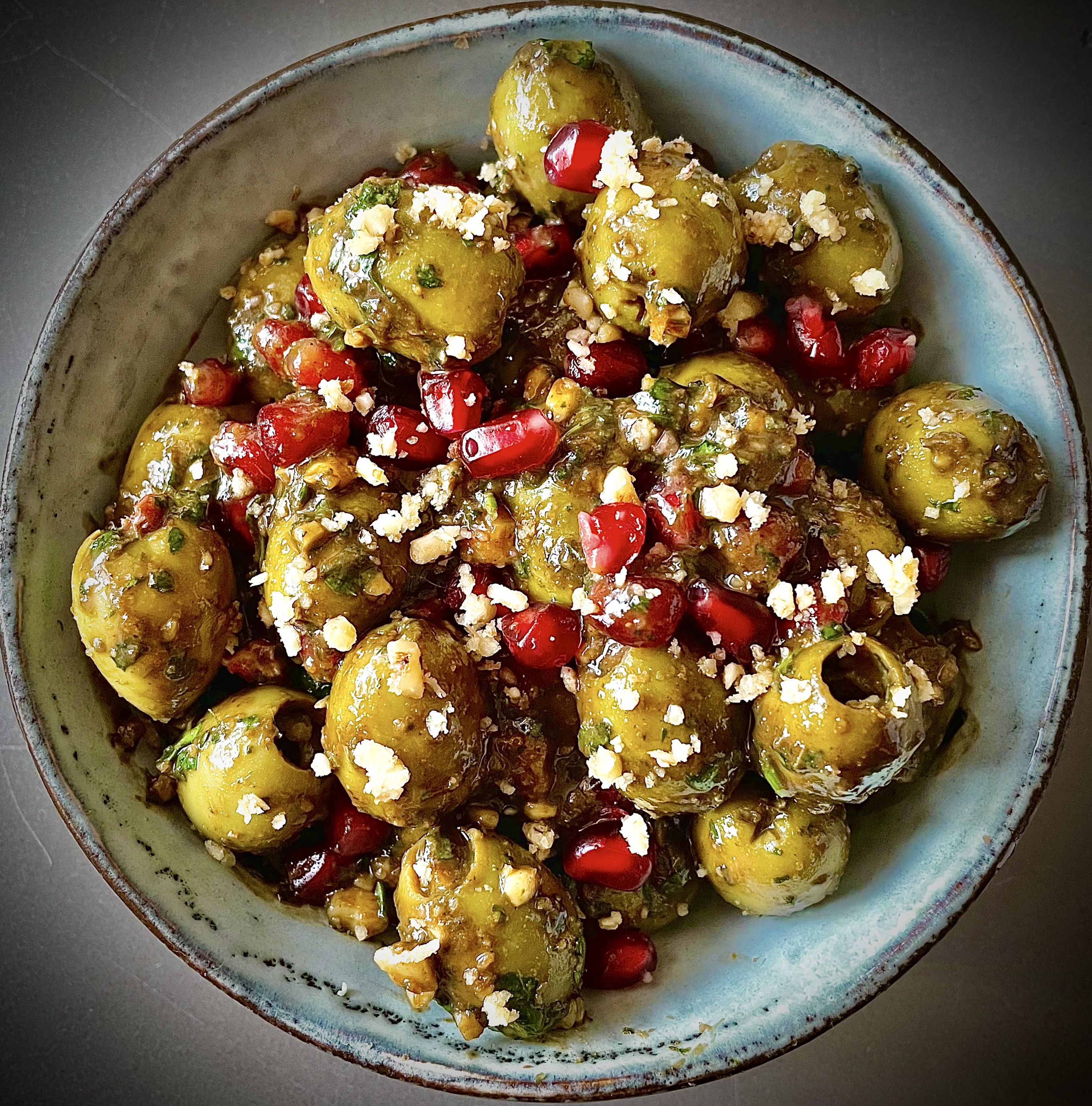
I use large pitted green olives like gordal  or karyatis olives. By using pitted olives, it allows for the marinade to seep into the olives and also makes it easier to eat them.T he flavour profile of this dish is sweet and sour and incredibly moreish.

How to Serve Zeytoon Parvardeh

It is an easy and quick dish to prepare and ideally made the night before so that the flavours blend and intensify. I often make a small bowl of this appetiser and slowly work my way through it with cheese and crackers – I hasten to add that eating it as an accompaniment with cheese is not authentically Iranian but it works!

Zeytoon Parvardeh can be eaten with pre-dinner drinks (wine, cocktails or hard liquor – whatever you fancy), as part of a mezze-style platter or array of dishes, or with cheese and crackers which is my favourite way to eat it.


Zeytoon Parvardeh

Prep Time15 minutes
Course: Appetiser
Cuisine: Persian, Iranian
Keyword: vegetarian, vegan
Servings: 4
Author: Mersedeh Prewer

Ingredients

  • 7 whole walnuts (or 14 halves)
  • 2 cloves garlic
  • 10 g fresh mint
  • 10 g fresh coriander
  • 10 g fresh parsley
  • 2 tbsp pomegranate molasses
  • 1 tbsp olive oil (extra virgin preferably)
  • 2 tbsp pomegranate juice (squeeze this out of the pomegranate or use 2 tbsp of the arils)
  • 350 g large pitted green olives (drained weight approx 160g)
  • 1 to 2 tbsp pomegranate arils (to stir through and garnish)
  • Ground walnuts (to sprinkle as a garnish)

Instructions

  • Add walnuts and garlic to a food processor and blitz until walnuts are finely ground.
  • Remove mint leaves from the stems. Remove the tougher parts of the stems from coriander and parsley. Then add herbs to walnut and garlic and pulse in the food processor until finely chopped.
  • Add pomegranate molasses, olive oil and the pomegranate juice. Pulse in the food processor until it is a coarse paste.
  • Mix the paste with the olives in a bowl. Stir through some pomegranate arils, reserving some for a garnish. Cover and leave in the fridge to marinate (preferably overnight).
  • Serve with ground walnuts and pomegranate arils sprinkled on top.