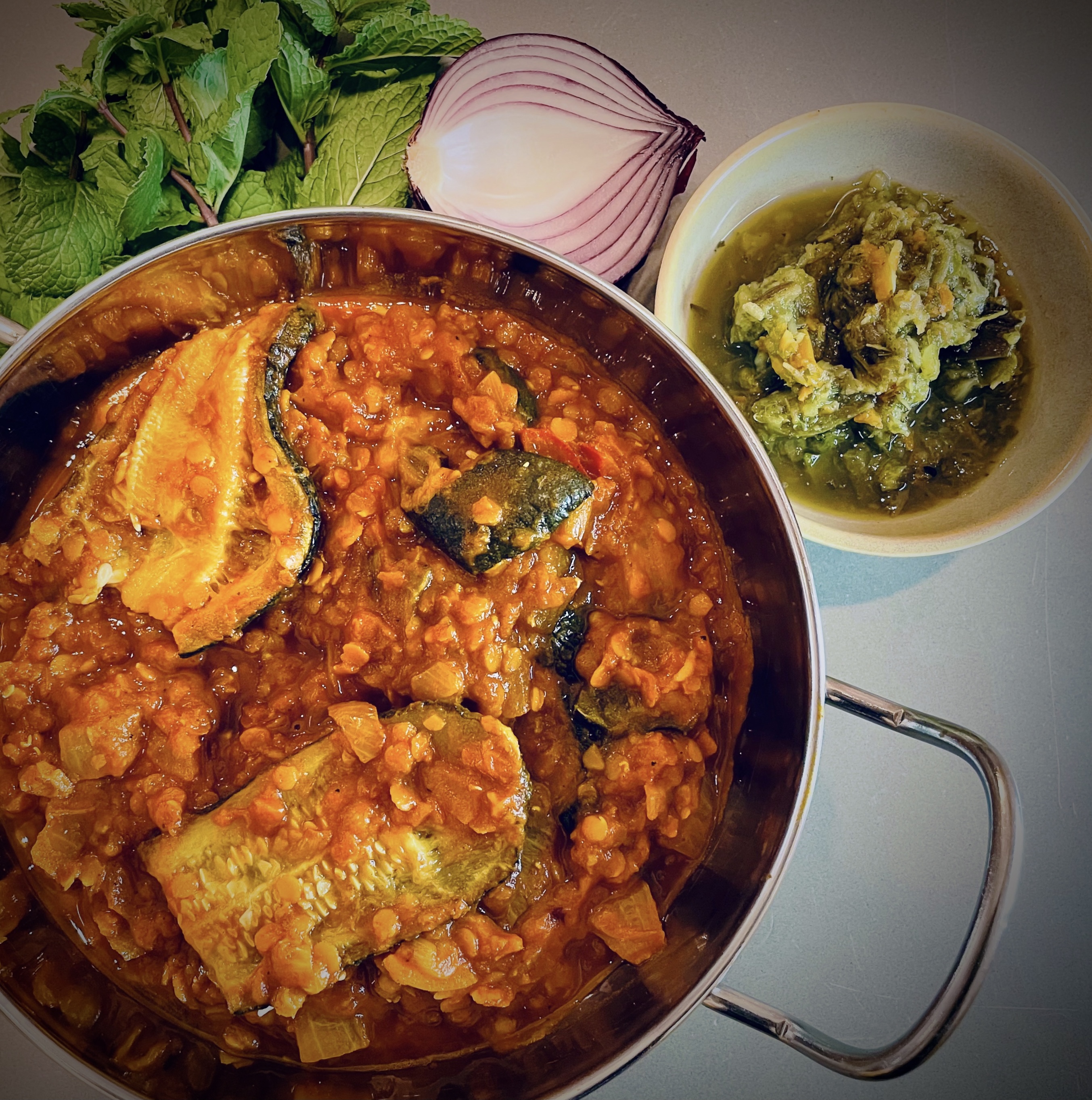
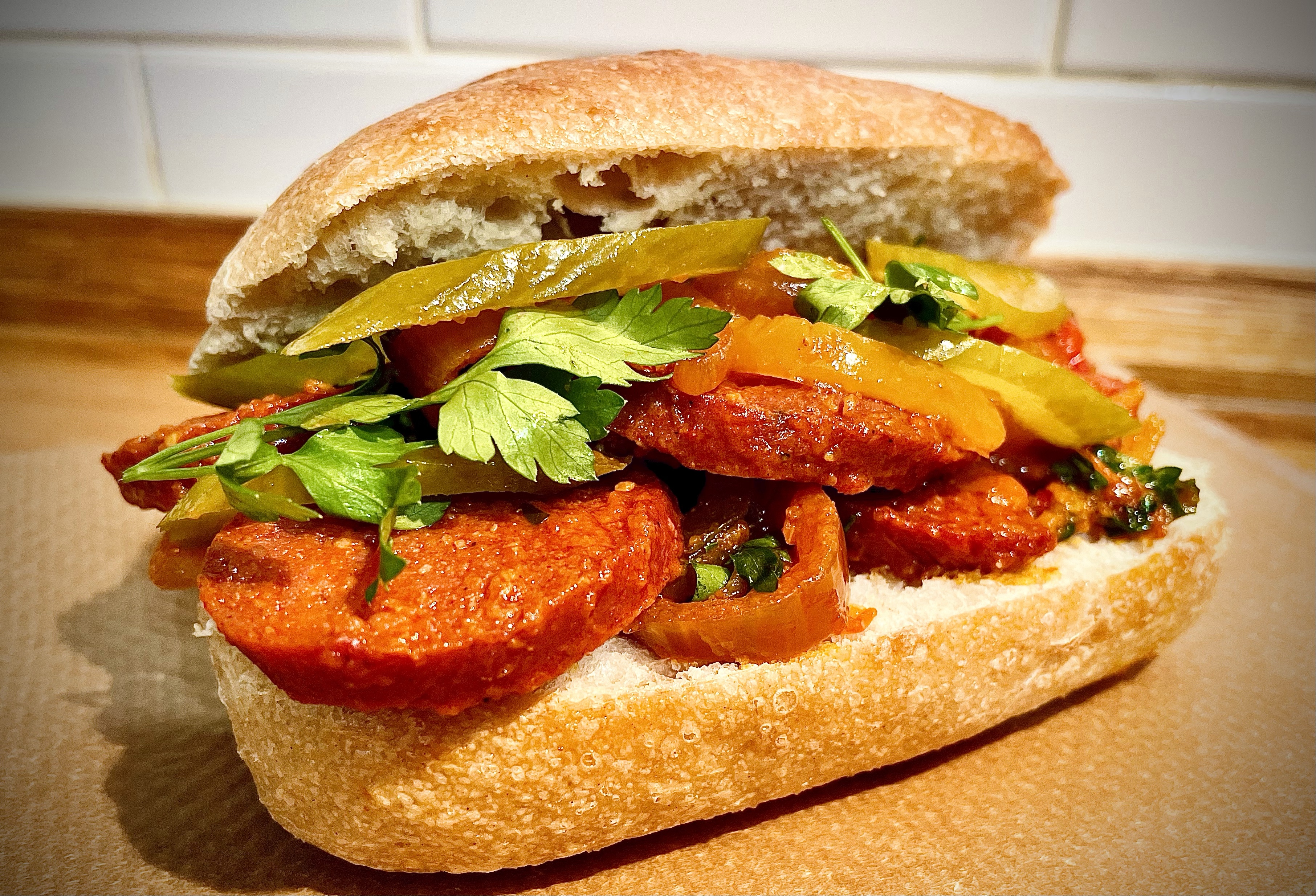
Showing: 1 - 6 of 6 RESULTS

Zereshk Polo ba Morgh (Barberry Rice & Saffron Chicken)

Steamed rice with a layer of sweetened barberries served with a saffron roasted chicken. This dish is a real Persian classic and one that most Iranians cherish!

It definitely tops my list of Persian comfort foods, reminding me of my childhood and the big family gatherings my mother would host.

What is Zereshk Polo ba Morgh?

Zereshk polo is Persian steamed rice, layered and/or topped with barberries. It is a sweet and sour dish. The barberries are gently sautéed on a low heat with sugar and bloomed saffron water before being added to the rice.

Where rice dishes are referred to as ‘polo’ (pronounced ‘pawlaw’) it usually indicates that the rice has been mixed with some other ingredient. Our plain white rice, served with our kebabs and khoresh (stews) is referred to as ‘chelow.‘ In the case of this dish, barberries are the additional ingredient. 

Barberries are edible red berries which grow in the wild in Europe and West Asia. They are rich in vitamin C and tart in flavour. They are called ‘zereshk’ in Persian and are bought and used in their dried form. You can buy zereshk from most Middle-Eastern food shops or online.

‘Morgh’ means ‘chicken’ in Persian and refers to the accompanying protein served with the rice. It is commonly served with poached saffron chicken or chicken stewed in a saffron sauce and either layered through the rice or on the side. Some Persian restaurants serve it with Jujeh Kabab (grilled chunks of chicken, marinated in onion, lemon juice and saffron). Either way, you must be getting a sense that some kind of saffron flavoured chicken complements this sweet and sour rice dish! 

My Version of Zereshk Polo ba Morgh

My mother and other members of our family would always poach chicken breast and layer it in the zereshk polo. I appreciate now that, when cooked for too long, this cut of meat can be quite dry. My recipe below uses chicken breast but the cooking method ensures it remains juicy. I generally source chicken from a butcher (online or the old-fashioned method of dropping into a local establishment).

For this recipe I bought chicken breasts with the skin left on and a partial wing (the drumette) in tact. I marinate the chicken overnight, pan fry them and then finish it off in the oven as per the recipe instructions below.

You can also eat this rice with saffron stewed chicken (see picture below). I will post a recipe for this in due course, but for now the recipe below is a homage to the dish I grew up with. The recipe below will also result in the delicious crispy rice formed at the bottom of the pot (tahdig). Tahdig adds a lovely crunchy texture to the dish.

How to Serve Zereshk Polo ba Morgh

Because of the layer of barberries and saffron rice, the key to serving this dish is to spoon the rice out on to a platter (as seen in the pics). The tahdig is usually served separately as a side dish.

Serve this dish with:
  • A mix of fresh herbs (coriander, parsley, mint, chives, tarragon and Thai basil).
  • Torshi (Persian pickles).
  • Maast O’Khiar (Persian yoghurt and cucumber dip).
  • Salad Shirazi (Persian chopped cucumber, tomato and onion salad).


Zereshk Polo ba Morgh

Barberry Rice and Saffron Chicken
Prep Time15 minutes
Cook Time1 hour 15 minutes
Total Time1 hour 30 minutes
Course: Main Course, Rice Dish
Cuisine: Persian, Iranian
Keyword: family recipes, chicken, saffron
Servings: 4
Author: Mersedeh Prewer

Ingredients

For the Saffron Chicken

  • 4 Chicken Breasts (with skin and drumette - see note above about cut)
  • 1 medium Onion (finely sliced)
  • 1 tbsp tomato purée
  • 1 tbsp Greek yoghurt
  • 2 tbsp olive oil (for the marinade)
  • 1/2 tsp turmeric
  • 1/8 tsp ground saffron (bloomed in 2 tbsp of water)
  • 1/2 lemon (juice squeezed)
  • Salt and Pepper (to season)
  • 25 g butter (to cook the chicken)
  • 2 tbsp olive oil (to cook the chicken)

For the Rice

  • 2 cups white long grain Basmati rice (approx. 400g)
  • 2 tbsp salt
  • 2 tbsp vegetable oil
  • 2 tbsp ghee or butter
  • 1/8 tsp ground saffron (bloomed in 2 tbsp of water for the tahdig - crispy rice formed at the bottom of the pot)
  • 1/4 tsp ground saffron (bloomed in 2 tsp of rose water and 2 tbsp of water for the saffron rice garnish)

For the Barberries

  • 5 tbsp barberries (washed)
  • 2 tbsp caster sugar (feel free to add more if you want it sweeter)
  • 1/8 tsp ground saffron (bloomed saffron in 2 tbsp of water)
  • 2 tbsp caster sugar

Instructions

Preparation

  • Chicken – take chicken breasts and place in large bowl. Add onion, tomato purée, yoghurt, olive oil, turmeric, saffron and fresh lemon juice. Mix until evenly coated. Cover and leave in fridge to marinate for minimum 8 hrs (preferably overnight).
  • Rice – gently wash rice in cold water until water runs clear. Then place rice with 1 tbsp salt in a bowl and pour in cold water to cover up to 2 inches above. Leave to soak for minimum 30 mins (preferably overnight).
  • Barberries – take a small saucepan, place it on low heat and add 1 tbsp butter. Once melted, add barberries, sugar and bloomed saffron water and stir for 30 secs. Turn heat off and set aside for later.

Cooking the Rice

  • No less than 1 hour before you want to serve this dish, fill a large non-stick saucepan (minimum capacity 2.5 litres) with approximately 1.5 litres water and 1 tbsp salt. Bring water to boil.
  • Drain rice and then add to saucepan. Gently stir rice to make sure it does not stick to the pan. Every minute give it a gentle stir and take a grain of rice and check the texture – either between your fingers or using your teeth. What you want is a soft outer layer but still firm in the centre i.e. al dente. It can take any time from 3 to 7 minutes with the quantity of rice in this recipe.
  • Once parboiled rice reaches the correct texture, turn heat off and drain in a colander or sieve. Sprinkle a little cold water to halt the cooking process. Taste the rice – if it is very salty then rinse further with a little water.
  • Place empty saucepan on stove. Add 2 tbsp oil to pan. Add bloomed saffron (1/8 tsp bloomed saffron in 2 tbsp water) to saucepan and mix with oil to distribute evenly (this will give a lovely golden colour to your tahdig).
  • To make tahdig, spoon 1-inch layer of rice into saucepan and gently stir to mix with saffron oil to ensure colour is distributed evenly. Then pat down flat with spoon. Then layer the rest of the rice, reserving 5 tbsp in a separate bowl, into a gentle sloping pyramid shape and poke a few holes in it. 
  • Take bloomed saffron (1/4 tsp of saffron bloomed in 2 tsp rose water and 2 tbsp water) and add to the bowl with the reserved rice. Mix gently to create a golden coloured rice. Then spoon the golden rice into the saucepan to one side of the white rice.  Do not mix it. This saffron coloured rice will be your garnish.
  • Pour 2 tbsp cold water evenly over and drizzle 2 tbsp melted ghee or butter over rice. Place glass lid on saucepan and turn heat to highest setting. Once steam starts to rise, lower heat to lowest setting. Cover the lid with a tea towel (making sure it is not a fire risk) and replace on saucepan.
  • Allow to steam for a minimum of 45 mins to get a crunchy layer of tahdig – the longer you steam the rice the thicker the tahdig.

Cooking the Chicken

  • Approximately an hour before you want to serve this dish and just before you launch into cooking your rice, remove chicken from fridge and bring up to room temperature.
  • Preheat the oven to 180ËšC (fan) / 200ËšC (conventional) / Gas mark 6.
  • Approximately 30 mins before the rice has completed the cooking process, take chicken and generously season both sides with salt and pepper. Discard the rest of the marinade including the onion.
  • Place a non-stick pan over high heat. Once smoking add a drizzle of olive oil and place chicken breasts skin down in pan. Cook on this side for 5 minutes or until the chicken skin is golden and crisp.
  • Flip over and add 25 grams of butter split into small knobs. Once melted, baste the chicken with the foaming butter for 1 min. Then flip so they are skin side up again.
  • Place in oven and cook for 15–20 mins. The flesh should be firm and white (not pink) and the juices should run clear. A temperature probe should read 75ËšC when it is safe to eat. Rest for 5 minutes before serving.

Serving the Dish

  • Once rice has completed its cooking time, turn off heat and remove lid from saucepan. Spoon the saffron-coloured rice out first into a separate bowl and reserve until you are ready to garnish. Spoon the rest of the rice onto a serving dish and plate up your tahdig separately. Then sprinkle the saffron rice over the white rice.
  • Reheat your barberries for 30 seconds on low heat, remove from and turn off the heat, and then spoon over the rice.
  • Serve the rice with the chicken, tahdig, a side of fresh herbs and / or Salad Shirazi and / or Maast O'Khiar and/or torshi.
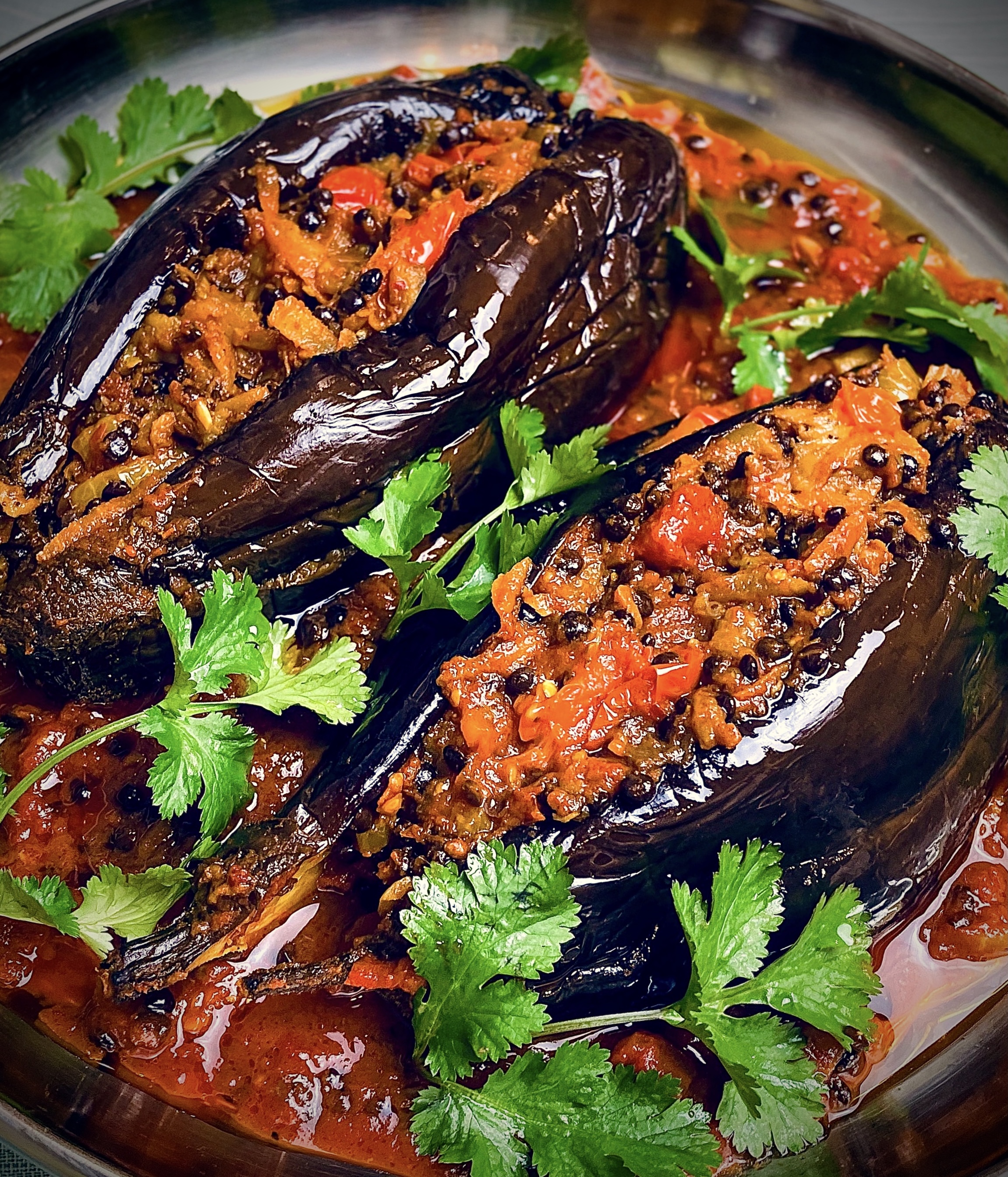
 

Garni Yarikh (Stuffed Aubergines in a Tomato Sauce)

A vegan version of a dish cooked by both the Turkish and Iranians. Aubergines stuffed with lentils cooked in a tomato and saffron sauce.

Origins of this Dish

Garni Yarikh comes from the Azerbaijani province of Iran (northwestern Iran bordering Iraq, Turkey, Armenia, and the Republic of Azerbaijan). The region is mostly populated by Azerbaijanis also known as Iranian Azeris, who tend to speak Azerbaijani (a Turkic language) as their first language.

Garni Yarikh translated is ‘torn belly’ with the Persian equivalent being ‘Shekam Pareh’. Traditionally the aubergine is stuffed with a mixture of mince meat and then simmered in a rich and tangy tomato-based sauce. The Turkish version, and where it originates from, is called ‘Karnıyarık.’

A Vegan Version

The recipe below is a vegan version, as Iranian food can be quite heavy on the meat. Where an opportunity presents itself, I like to adapt a recipe to be plant-based. To make the recipe vegan, I have replaced the mince meat with lentils and added vegetables to the stuffing mixture. You can use any lentils you want. I buy pre-cooked lentils as it reduces the preparation and cooking time.

My go-to lentils for this dish are Merchant Gourmet Beluga Lentils. They absorb the sauce brilliantly and have a lovely texture.

If you have time, I recommend salting and leaving the aubergines for 30 minutes to draw out some of the water. Aubergines can afford to lose a little water pre-cooking but it isn’t an issue if you just want to launch into the recipe as per the steps below.

What to Serve with this Dish

Eat Garni Yarikh with a salad like tabbouleh and hummus on the side. This dish can also be served with rice (kateh or chelow). Also flatbread is a great accompaniment. 


Garni Yarikh

Stuffed aubergines in a tomato sauce
Prep Time10 minutes
Cook Time1 hour 20 minutes
Total Time1 hour 30 minutes
Course: Main Course
Cuisine: Iranian
Keyword: tomatoes, vegetarian, vegan, aubergines
Servings: 4
Author: Mersedeh Prewer

Ingredients

  • 4 tbsp olive oil
  • 2 large aubergines
  • 1 onion (finely diced)
  • 1 carrot (grated)
  • 1 celery stick (finely sliced)
  • 4 garlic cloves (crushed)
  • 1 tsp turmeric
  • 1 tsp smoked paprika
  • 1/2 tsp dried red chilli flakes
  • 2 tbsp tomato purée
  • 1 pack Merchant Gourmet Beluga Lentils (250 grams cooked weight)
  • 250 ml water
  • 1 tbsp maple syrup
  • 150 g cherry tomatoes (halved)
  • 400 g tin of chopped tomatoes or passata
  • 1/8 tsp ground saffron bloomed in 2 tbsp of water (optional)
  • A few sprigs of fresh coriander (for garnish)
  • Salt and pepper to season

Instructions

Prepare and Roast the Aubergines

  • Pre-heat oven to 180°C (fan) / 200°C (conventional) / Gas Mark 6.
  • Slice aubergines lengthways. Then take a knife and criss-cross the flesh. Brush aubergines with olive oil and some of the crushed garlic and season well. Place on baking tray and roast in oven for 30 mins or until flesh is soft and cooked through.

Make the Lentil Stuffing Mixture

  • In the interim, take a frying pan, add 2 tbsp olive oil and place over medium-high heat.
  • Add onions and fry until they turn golden. Then add carrot, celery and garlic (reserve a little garlic for the tomato sauce) and cook until vegetables have softened.
  • Add turmeric, smoked paprika and chilli flakes. Follow with tomato purée and stir until evenly distributed in the mixture for a few minutes.
  • Add lentils, cherry tomatoes, water and maple syrup. Reduce the heat to low and let it cook for about 5 to 10 minutes until water has been absorbed and the cherry tomatoes have softened.
  • Remove aubergines from the oven. Scoop out some of the flesh, gently taking care not to tear the aubergine cases. Add flesh to the lentil mixture, stir and season to taste. Let the flavours of the mixture combine by gently cooking for a few minutes, stirring now and again.

Make the Tomato Sauce

  • Take a shallow casserole pan with a lid, place it on medium-low heat and add 1 tbsp olive oil and remaining garlic. Let it infuse with oil, being careful not to let it burn. Add chopped tomatoes / passata, the bloomed saffron and season. Let it simmer gently for 10 mins.

Assemble the Dish and Simmer

  • Take one aubergine half and gently place it on the tomato sauce. Fill it with half the lentil mixture and then place the other half of the aubergine on top. Repeat with the other 2 halves. Don't worry if some of the lentil mixture falls into the sauce - it will add to the overall flavour. Leave to simmer with the lid on the pan for approximately 20 mins.

Serve the Garni Yarikh

  • Serve aubergine garnished with fresh coriander accompanied by rice or bread and salad with a citrus dressing. If you feel confident serve the aubergine with the split facing upwards like I have in my picture so it looks like they have been stuffed.

A Baluchi-Style Breakfast (Chickpea Curry and Parathas)

This chickpea curry served with parathas and fried eggs is a great addition to your weekend brunch catalogue of recipes. Make this recipe the night before and just re-heat if you want a lie-in and a lazy morning.

Sistan and Baluchestan

My journey to discover more about the cuisine of Iran has led me to Sistan and Baluchestan in the South-East of Iran. It is the second largest province of the 31 provinces of Iran, after Kerman Province.

The province borders Pakistan and Afghanistan and has a population of 2.5 million, which the majority are Baloch. They mainly inhabit mountainous terrains which has allowed them to maintain a distinct cultural identity and resist domination by neighbouring rulers. Approximately 20-25% of the worldwide Baloch population live in Iran. The majority of the Baloch population reside in Pakistan, and a significant number (estimated at 600,000) reside in southern Afghanistan. Baluchestan of Iran has been regarded as the most underdeveloped, desolate, and poorest region of the country.

A Spicier Cuisine

The food from the Southern Provinces of Iran tends to be spicier. In light of its bordering countries, Sistan and Baluchistan has a cuisine similar to those countries. Street food vendors and restaurants offer a range of dishes from chickpea curry served with fried eggs and parathas for breakfast; to kebabs rubbed with spices referred to as ‘Baluchi Masala’ for dinner. Restaurants in the area also serve karahi (curry-style dishes) and biryanis, whilst also offering an array of traditional Persian dishes.

The recipe below seeks to re-create the breakfast dish of chickpea curry with parathas and fried eggs eaten in the hustle and bustle of Chabahar. The city is situated on the Makran Coast of the Iranian province of Sistan and Baluchestan. It is officially designated as a “Free Trade and Industrial Zone.” The name of the city translated means Four Springs as the climate feels like spring all year round.

What are Parathas?

Parathas are a type of flatbread commonly eaten in South Asian cuisine. The ingredients are simply plain flour, water, some oil and / or ghee and salt. Gently knead and rest the dough for 30 mins before cooking in a skillet or frying pan. Then butter before serving.

If you don’t want to make the paratha, by all means pop into your local Asian supermarket and purchase some or any other flatbread such as chapatis or roti. I am not a seasoned paratha maker but if you follow the recipe and steps below, the resulting breads are soft, flaky and perfect for dipping into the yolk of your fried egg and scooping up the chickpea curry.

Tips for Making this Dish

You may have eaten Channa Masala, Channay or Chole before as this curry is known in the Indian subcontinent. As with all aromatic food, the longer you cook/leave it the more intense the flavours. I often prepare the chickpea curry the night before and let it simmer for over an hour to intensify the flavours.

I also make the parathas the night before and just heat them up in a dry frying pan or skillet the next morning so all I am cooking are the eggs on the day we want to eat this meal.

If you are making this dish all in one go, then make the chickpea curry first. While the tomato sauce is simmering (before you add the chickpeas), prepare the paratha dough. Then, after you add the chickpeas to the sauce, just let the curry simmer gently as you roll out and cook the parathas. Fry the eggs as the final stage.

How to Serve this Dish

Serve this dish with fresh herbs such as coriander, mint, Thai basil and tarragon alongside the parathas, curry and fried eggs. My family and I often eat this breakfast/brunch dish washed down with a homemade mango lassie or Persian tea.

Other Breakfast Inspiration

Breakfast is probably my favourite meal of the day so I invest as much time in it as I would an evening meal. Check out my other breakfast recipes to enjoy for weekend family brunches.


 A Baluchi-Style Breakfast

Prep Time30 minutes
Cook Time1 hour
Total Time1 hour 30 minutes
Course: Breakfast, Brunch
Cuisine: Iranian
Keyword: vegetarian, egg recipes
Servings: 6
Author: Mersedeh Prewer

Ingredients

For the chickpea curry

  • 2 tbsp vegetable oil
  • 1 onion (finely sliced)
  • 4 cloves garlic (crushed or minced)
  • Thumb-size piece fresh ginger (grated)
  • 1 tsp cumin seeds
  • 1 tsp ground coriander
  • 1 tsp turmeric
  • 1/4 tsp garam masala
  • 400 g tin of chopped tomatoes
  • 2 x 400 g tins of chickpeas (drained)
  • 200 mls water
  • Fresh lime juice (half a lime)
  • Salt and pepper (to taste)
  • Chopped fresh coriander (to garnish)

For parathas

  • 3 cups plain flour (UK standard measuring cup plus extra to sprinkle on parathas)
  • 1 tbsp vegetable oil
  • 2 tsp salt
  • Water (as required to form a sticky dough in the region of 1.5 to 2 cups)
  • Oil or ghee to brush and cook the parathas 

For the eggs

  • 6 large free-range eggs
  • 2 tbsp vegetable oil
  • Salt and pepper (to taste)

Instructions

For the chickpea curry

  • Take a saucepan and place it on medium-high heat. Add 2 tbsp oil.
  • Add onion and cook until it softens and turns golden. Then add garlic and ginger and stir.
  • Once aroma of garlic and ginger starts to permeate, add cumin seeds, ground coriander, turmeric and garam masala and stir. Allow mixture to cook with spices for about 2 mins.
  • Add chopped tomatoes and once bubbling lower the heat to low- medium to allow the mixture to simmer. Simmer for 20 to 30 mins.
  • Then add chickpeas, water, lime juice, salt and pepper and stir. Leave to simmer for 20 mins minimum until you are ready to serve. Garnish with fresh chopped coriander before serving.

For the parathas

  • Add flour, oil, salt, to a large mixing bowl and mix until incorporated and only tiny lumps remain. Initially add about 1 cup water and mix into flour mixture. Then add more water in small increments to form a dough (I usually require 1.5 to 2 cups of water in total to make a dough). Knead dough for about 5 mins and then leave to rest for 30 mins.
  • After resting time, the texture should be soft and dough lighter. Take the dough and split into 6 equal amounts and roll into a ball.
  • Sprinkle some flour onto work surface. Take one ball of dough and roll to approximately 10cm in diameter with a rolling pin. Brush with a little oil / ghee, sprinkle with a little flour and then fold the dough like a fan. Take one end and roll it along the edge of the dough until it forms back into a ball (like a Catherine wheel). Leave to rest in fridge while you repeat the process with the other balls of dough. This will create the layered, flaky texture for the final cooked parathas.
  • After preparing the ‘Catherine wheel’ dough balls, take a frying pan or skillet and place it on high heat. Drizzle some oil / ghee into pan.
  • Take dough balls out of fridge. Take the first dough ball and roll it until it is approximately 1/2cm thick. Then cook it in the hot pan for 3 minutes on each side, or until nicely charred. While cooking, brush with a little bit more oil / ghee on each side. Repeat with the remaining dough balls.
  • Once the parathas are cooked, turn off the heat and leave cooked parathas to one side until you are ready to serve.

For the eggs

  • Add oil to frying pan / skillet and place on medium-high heat.
  • Crack eggs into pan, cover with a tight lid and cook for 3 mins or until white is set.
  • Season with salt and pepper and serve alongside chickpea curry and parathas.

Sosis Bandari (Spicy Sausage Sandwich with Saffron Roasties)

A famous street-food sandwich from the South of Iran made with beef sausages, peppers and onions cooked in a spicy and rich tomato sauce. This recipe comes with a side of saffron tatties served with harissa mayo!

What is Sosis Bandari?

This dish is basically the Persian equivalent of a sausage sandwich! Beef sausages are cooked with onions and peppers in spicy tomato sauce and it is commonly served in a baguette-style bread.

Sosis Bandari translated is sausage from the port or port-style sausage. ‘Sosis’ is the Persian word for sausage, and ‘Bandar’ means port. Apparently this dish was invented in one of the northern ports of Iran, called Bandar Anzali where the first sausages were introduced from Iran (probably from Turkey). However, it became trendy amongst southern port residents, and the dish is now associated with Southern Iran. Iranians who live in the south of Iran mostly eat spicy foods and this dish packs a punch due to their revisions to the original recipe. 

Ingredients in Sosis Bandari

I love this dish as it is so easy to cook and, other than the sausage, all other ingredients are available at your local supermarket.

You will need:
  • Sucuk / Sujuk: a Turkish fermented sausage consisting of ground beef, garlic and other spices. they are encased in a red skin, which you peel off before cooking. You can buy them from most Middle Eastern supermarkets or online. If you cannot find sujuk, then use any other sausage you fancy including vegetarian or vegan varieties. Sujuk has a fair bit of oil in it and the heat of the pan should release sufficient amounts to cook the sausage and other vegetables. Add a dash of olive oil to your pan if required.
  • Garlic, turmeric and red chilli flakes: aromatics to flavour the dish.
  • Red onion, yellow pepper and cherry tomatoes: vegetables used for the dish.
  • Tomato puree and water: used to make the sauce for the Sosis Bandari.
  • Salt & Pepper: to season the dish.
  • Parsley: added as a garnish.

If you are using your local supermarket raw sausages then cook them first (as per the instructions on the packet) before slicing them up and adding to the recipe below.


Ingredients in Saffron Roasties and Harissa Mayo

Traditionally Sosis Bandari includes potatoes in the mixture itself, however my recipe extracts the potatoes and cooks them separately by making them into saffron flavour roasties to be eaten as a side dish and dipped into harissa mayonnaise. 

You will need:
  • Olive Oil: used to roast the potatoes.
  • New Potatoes: you can use any potatoes suitable for roasting. I use this variety as they are small, no need to peel and they cook quickly.
  • Saffron: used to flavour and colour the roasties.
  • Water: used to boil the potatoes. 
  • Salt & Pepper: to season the tatties.
  • Mayonnaise, Harissa Paste and Lime Juice: combined to make the Harissa may to dip the roasties in. I use Belazu Harissa paste either the rose or the standard version is fine.

How to Serve this Dish

I serve this dish as a sandwich using a rustic roll with a side of saffron roasties. I also love to put pickled cucumbers and some fresh herbs in the Sosis Bandari Sandwich. A cousin of mine recently mooted adding cheese to the sandwich which would also be an excellent addition.

Other Handheld Pockets of Deliciousness

Check out our other recipes:


Sosis Bandari

Persian spicy sausage with saffron roasties
Prep Time20 minutes
Cook Time45 minutes
Course: Main Course, lunch
Cuisine: Persian, Iranian
Keyword: easy recipe, sujuk, sucuk, spicy
Servings: 4
Author: Mersedeh Prewer

Ingredients

For the Saffron Roasties

  • 600 g new potatoes (halved – approx 150 grams per person)
  • 1/8 tsp ground saffron
  • Water to boil the potatoes
  • 2 tbsp olive oil
  • Salt and pepper (to taste)

For the Sosis Bandari

  • Approximately 300 grams of Sucuk Turkish sausages (remove outer skin / casing and slice diagonally) – see note above re: alternatives to sucuk
  • 2 cloves garlic (crushed)
  • 1 tsp turmeric
  • 1/2 tsp dried red chilli flakes
  • 1 large red onion (finely sliced)
  • 1 yellow pepper or red or green (finely sliced)
  • 1 heaped tbsp tomato purée 
  • 100 g cherry tomatoes (halved)
  • 100 ml water
  • Salt and pepper (to taste)
  • Fresh chopped parsley (to garnish)

For the Harissa Mayonnaise

  • 8 tbsp mayonnaise
  • 2 tbsp Harissa paste
  • A squeeze of a fresh lime

To Serve

  • 4 crusty rolls / mini baguettes
  • sliced gherkins or Persian pickled cucumbers and / or cheese can also be included in the sandwich

Instructions

Harissa Mayo

  • Combine mayo, harissa paste and lime juice in a small bowl. Cover and place in fridge until you are ready to serve the dish.

Roasties

  • Take a saucepan and fill with water, add halved new potatoes and saffron. Turn the heat to high and bring to a boil. Boil potatoes for approximately 8 to 10 minutes - you want them cooked through but not too soft as they will fall apart in the roasting stage.
  • While potatoes are cooking in the saucepan, pre-heat oven to 180°C (fan) / 200°C (conventional) / Gas Mark 6.
  • Turn the stove off and drain potatoes. Take a baking tray and place potatoes on it. Add oil, salt and pepper and toss potatoes until evenly coated. Place tray in oven and roast the potatoes for 30 minutes or until crispy to your liking.

Sosis Bandari

  • While potatoes are roasting, take a frying pan (about 30 cm diameter) and place on medium-high heat.
  • Add sliced sausages to pan, cook until they release oil and start to curl. Then add garlic, turmeric and chilli and stir until evenly distributed. Add sliced onions and pepper and stir until they start to soften.
  • Add tomato purée and stir. Add halved cherry tomatoes. Then add water and stir and lower heat to let the sosis bandari cook gently for about 5 minutes. Season to taste and scatter some chopped fresh parsley over the top.

Serving the dish

  • Turn oven and stove off. Remove the potatoes from the oven and place them on a paper towel to soak up any excess oil.
  • Fill rolls / baguettes with the sosis bandari (sliced gherkins or Persian pickled cucumbers and / or cheese can also be included in the sandwich).
  • Serve the sosis bandari sandwiches with a side of roasties and some harissa mayo to dip them in.

Persian Delights (Rose Water & Pistachio Cupcakes)

Make these Persian inspired cupcakes flavoured with rose water and pistachios. Beautifully elegant whether serving at home to friends or as wedding cupcakes.

I first made these cupcakes over 10 years ago for a friend’s wedding and they have been a firm favourite ever since.

I experimented with many flavours but these were the favourite amongst my family. Not surprising really as they are flavoured with rose water and pistachio. Had I found a use for saffron in the recipe, then I would have had the holy trinity of Persian desserts! But I felt the pink and ivory tones were perfect for the cupcakes’ presentation and that the yellow effect of incorporating saffron would not have been as aesthetically pleasing.

The Rise of the Cupcake

Cupcakes enjoyed a lot of attention and glamour following the episode in Sex and the City featuring Magnolia Cupcakes. The UK saw Violet’s Cakes, Hummingbird Bakery and Lola’s Cupcakes as the UK’s representation in the delicious world of luxury cupcakes.

Most people I speak to have baked cupcakes before but even if you are a first-timer, despite how pretty these mini cakes look, they are very easy to create. Many of us have cake-making equipment in our kitchen nowadays, such as electric beaters or stand mixers and if not it’s a great workout for the arms!

Standard Cake Batter Recipe

My go-to recipe for a basic cake batter is what I call the 4:225 ratio. For 4 eggs, I use a weight of 225 grams for the dry ingredients and butter.

  • Unsalted butter –  225 grams;
  • Caster sugar -225 grams;
  • Self-raising flour – 225 grams;
  • Free-range eggs x 4;
  • 1 teaspoon baking powder; and
  • 1 teaspoon Vanilla extract.

The above are the ingredients for a basic vanilla sponge. I then add other flavours, such as rose for this recipe or lime zest for my cherry and lime flavoured victoria sandwich. This standard cake batter recipe creates a lovely crumb and yields 12 cupcakes in a muffin-style tray or 1 x two layer victoria sandwich (8″ diameter). 

Decorating the Cupcakes

For the decoration, I use a standard buttercream icing flavoured with vanilla and rosewater. I use crushed fresh pistachio slivers and edible rose petals, which are both available from Iranian and Middle-Eastern supermarkets. If you cannot get your hands on rose petals, then crushed fresh pistachios are equally lovely for decorating.

Storing the Cupcakes

Store cupcakes in an airtight container for up to 3 days.


Persian Delights Instagram Reel


https://www.instagram.com/reel/CnjyceKAXQE/?utm_source=ig_web_copy_link


Persian Delights

Rose water and pistachio cupcakes
Prep Time25 minutes
Cook Time25 minutes
Total Time50 minutes
Course: Dessert, Sweet Treats
Cuisine: Persian, British, Cross-cultural
Keyword: cupcakes
Servings: 12 large cupcakes
Author: Mersedeh Prewer

Ingredients

Cake Batter / Sponge

  • 225 g unsalted butter (room temperature)
  • 225 g caster sugar
  • 4 medium free range eggs (room temperature)
  • 225 g self-raising flour
  • 1 tsp baking powder
  • 1 tsp vanilla extract
  • 1 to 2 tbsp rose water (depending on how floral you want it)
  • 1 to 2 tbsp ground fresh pistachios

Buttercream Icing and Decoration

  • 250 g unsalted butter (room temperature)
  • 450 g icing sugar
  • Pink food colouring (if you want your cupcakes to have a pink tint - I do a mix of ivory and light pink cupcakes)
  • 1 tsp vanilla extract
  • 1 to 2 tbsp rose water
  • 2 tbsp milk
  • Ground pistachios and edible rose petals (for decoration)

Instructions

For the Cupcake Sponge

  • Preheat oven to 160°C (fan) / 180°C (conventional) / Gas mark 4. Line a 12-hole cupcake tin with cases (deep fill cupcake tin).
  • In a mixing bowl, beat butter and sugar until light in colour and fluffy.
  • Crack eggs one by one and beat each one in before adding the next.
  • Add vanilla extract and rose water. Then sift flour and baking powder into bowl and gently fold into mixture.
  • Add ground pistachios and gently fold into mixture.
  • Divide mixture equally into cupcake cases and place in oven for 20 to 25 mins. To check if cupcakes are done, use a thin skewer to check one by gently poking to the bottom. It should come out clean of cake batter. Leave cupcakes to cool completely on a wire rack.

For the Buttercream Icing and Decoration

  • Make buttercream by beating butter until light in colour and then sift the icing sugar gradually and beat until fully mixed.
  • Then add vanilla extract, rose water and milk and mix. I halve my icing mixture and add pink food colouring to one batch and leave the other half an ivory colour. 
  • Make sure your cupcakes have cooled and then pipe or spread your icing onto the cupcakes.