Persian lamb patties
Kotlet (Persian Lamb Patties)


COOKING WITH AROMATIC HERBS & SPICES
Persian lamb patties


Many Iranians are more familiar with our turnip soup for illnesses (Ash-e Shalgham) but for me it will always be our version of the classic concept of chicken soup that I turn to when in need.
Creamy, hearty and comforting – essential components for a medicinal chicken soup.
In Persian (Farsi) ‘Jo’ (pronounced ‘joh’) means barley – so we have simply named this soup ‘barley soup,’ despite the additional ingredients required to make this divine soup. This soup is easy to cook and as you can see below, the ingredients can be easily sourced from most local supermarkets.
Traditionally this soup is thickened with a roux, which I feel is unnecessary and makes the soup too thick and gloopy. With the availability of the handy stick-blender you don’t need to use a bechamel and can thicken the soup by blending a little bit of it. Also cream makes for a luxurious addition to the soup so my variations to the traditional recipe actually results in a velvety and lighter soup.
If you are not a fan of coriander, then replace with parsley, which is the herb more commonly used in this recipe.
You can convert this into a vegetarian recipe by using vegetable stock and using mushrooms as an alternative to the chicken. I recommend frying the mushrooms in a little butter and garlic and then adding them to the soup for the last 10 mins of simmering and before serving.
It is such a hearty soup you don’t need to have bread with it but do feel free to have a buttered crusty roll or whatever you fancy to dip into the soup.
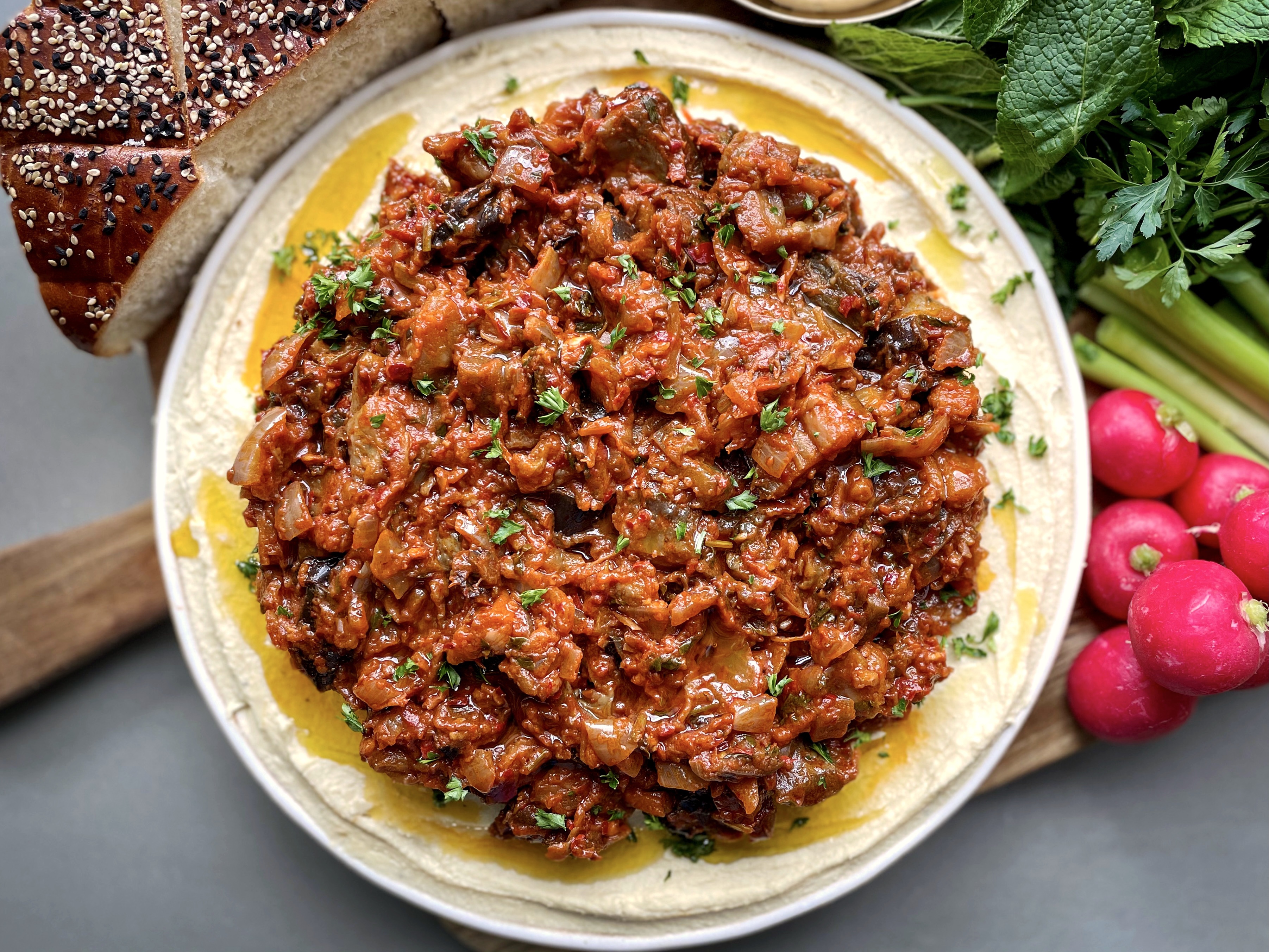

Most people are familiar with this incredible and versatile dip. For those who are new to velvety dip, hummus is a savoury Middle-Eastern dip made from cooked, chickpeas blended with olive oil, tahini (sesame paste), lemon juice, and garlic. It is difficult to pinpoint the exact origins of hummus as multiple different theories and claims of origins exist in various parts of the Middle-East but apparently the earliest known written recipes for a dish resembling it are recorded in Egyptian cookbooks written in the 13th century.
It can either be made with a chunky or smooth texture and comes in a variety of different flavours and different toppers. From plain hummus with a drizzle of olive oil and sprinkling of za’atar to Beetroot Hummus with Feta and Anything-Green Topper, the variations to the offering of hummus are endless.
For those of you who may not know, harissa originates from North Africa, while every region has its own variation and take on the paste, it’s particularly associated with Tunisia. It is a hot chilli pepper paste, the main ingredients of which are roasted red peppers, Baklouti peppers, spices and herbs such as garlic paste, caraway seeds, coriander seeds, cumin and olive oil.
Rose harissa contains dried rose petals, and, usually, rosewater too. This softens the heat and adds a subtle floral note to the dishes it is added to. I use Belazu rose harissa. They also do an apricot version which can be used as a substitute in the recipe below as can the standard harissa paste.
The topper to this hummus dish is simply sautéed aubergines and onion with the addition of rose harissa, garlic, tomato purée, balsamic vinegar and fresh coriander to create an aromatic dish with a little heat.
The aubergine mixture, which you can either have cold or warm, is then layered on hummus and served with some bread to dip into it. You can buy your favourite brand of hummus as opposed to making it from scratch but the recipe for hummus below is so easy, resulting in a beautifully creamy and smooth hummus, I can’t recommend it enough.
It is a really easy dish to prepare and one that can easily be cooked up after work. It is vegan so a great option for a ‘Meat Free Monday’ meal. Served with other mezze-style offerings such as bread, olives or, as pictured, a fresh herb and feta cheese platter, this dish can generously feed 4 people.
If there are any leftovers, place in an airtight container and store in the fridge up to 3 days. Makes a great sandwich or wrap filler.

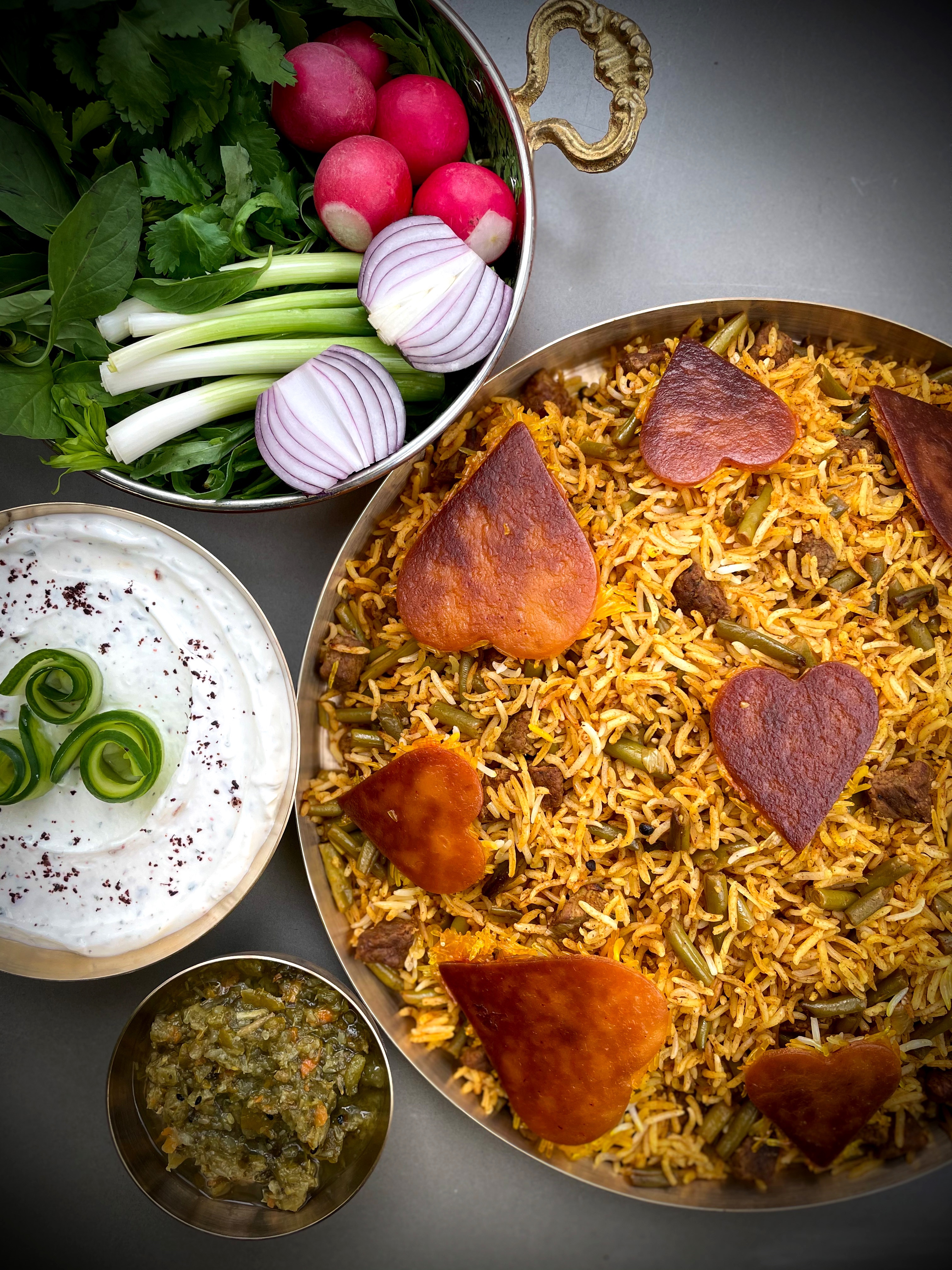

Loobia polo is an Iranian dish made with rice, green beans, and beef or lamb. Loobia means beans in Persian (Farsi) and ‘polo’ indicates it is a rice-dish layered with meat and / or vegetables.
Think of that dish that represents the ultimate comfort food for you, Loobia Polo is the equivalent to that to most (if not all) Iranians. Even the fussiest of kids will love this dish and that stays with them through to adulthood. Everyone squeals with delight when Loobia Polo is served with its warming cinnamon notes, tomato flavour, chunks of meat and green beans.
The rice I use for Loobia Polo is Kamran Basmati Sella Rice as opposed to Tilda Basmati rice. Kamran rice is very forgiving as it is a thicker kernel and holds its integrity against the bean and tomato mixture, which releases liquid into the rice. For this reason, if you are using the more delicate Tilda grain you have to remove it from the parboiling stage a little earlier than you would with the normal Chelow recipe. Alternatively buy yourself a packet of Kamran rice and be less exact and turn out a perfect Loobia Polo each time you cook it.
You can use lamb, chicken, turkey or mushrooms (if you are veggie) as an alternative to beef in this dish.
The recipe below includes the steps to make flatbread tahdig (using a tortilla wrap) but you can make tahdig with rice or potato,should you prefer. Just prepare a layer of saffron rice at the bottom of the pan at step 3 under the heading ‘For the rice’ below for rice tahdig; or layer your potato slices for potato tahdig.
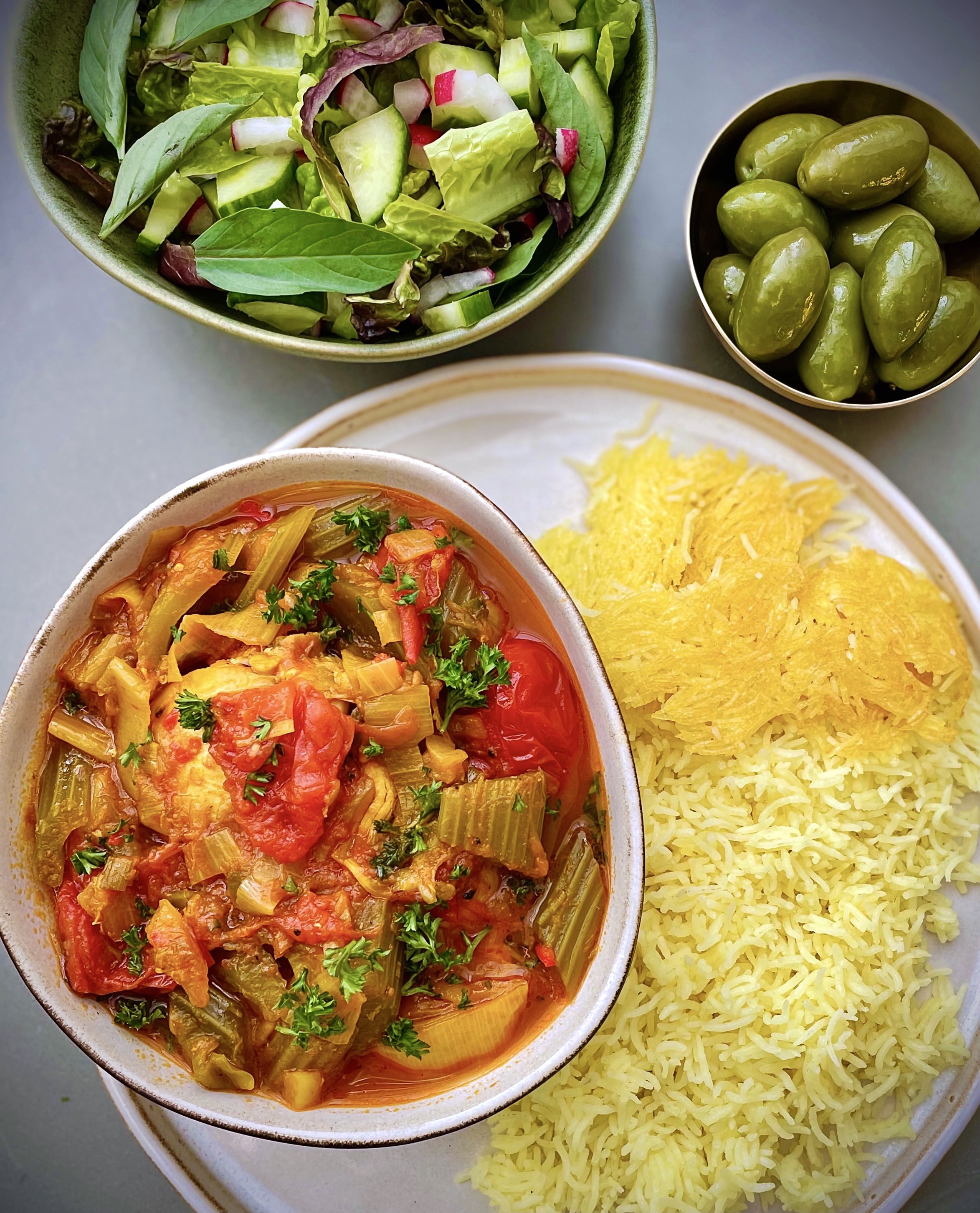

This stew is the lesser-known of the Persian celery stews. The famous one being Khoresh Karafs made with lamb, mint, parsley and celery. This version can be made with chicken, lamb or beef with the stew being tomato-based.
In my family, we distinguish between the two by referring to the colour: ‘Sabz,’ which translated means green in Farsi, for the herby version; and ‘Ghermez,’ which means red, for the tomato-based version. In fact, this version is probably the most popular among my mother’s side of the family, who primarily come from Mashhad in the Khorasan Province of Iran.
With tomatoes apparently only being introduced to Iran in the late 19th century, this stew is inevitably fairly young in the longstanding history of Iran and the Persian Empire. Some Iranians have never heard of this stew!
How to Serve Khoresh Karafs – Germez?
Serve with this stew with Kateh (Persian rice cooked the easy way). A simple salad with a citrus dressing, or fresh herbs, or pickle / olives also make complementary side dishes.
I cannot recommend this recipe enough with it being so easy to prepare and cook, using only a handful of ingredients but maximising on flavour. It is a comforting yet light stew so I love eating this in the earlier part of Spring as we make the gentle transition away from eating the heartier dishes and move towards salads, BBQ’s and a Mediterranean feel to our dishes.
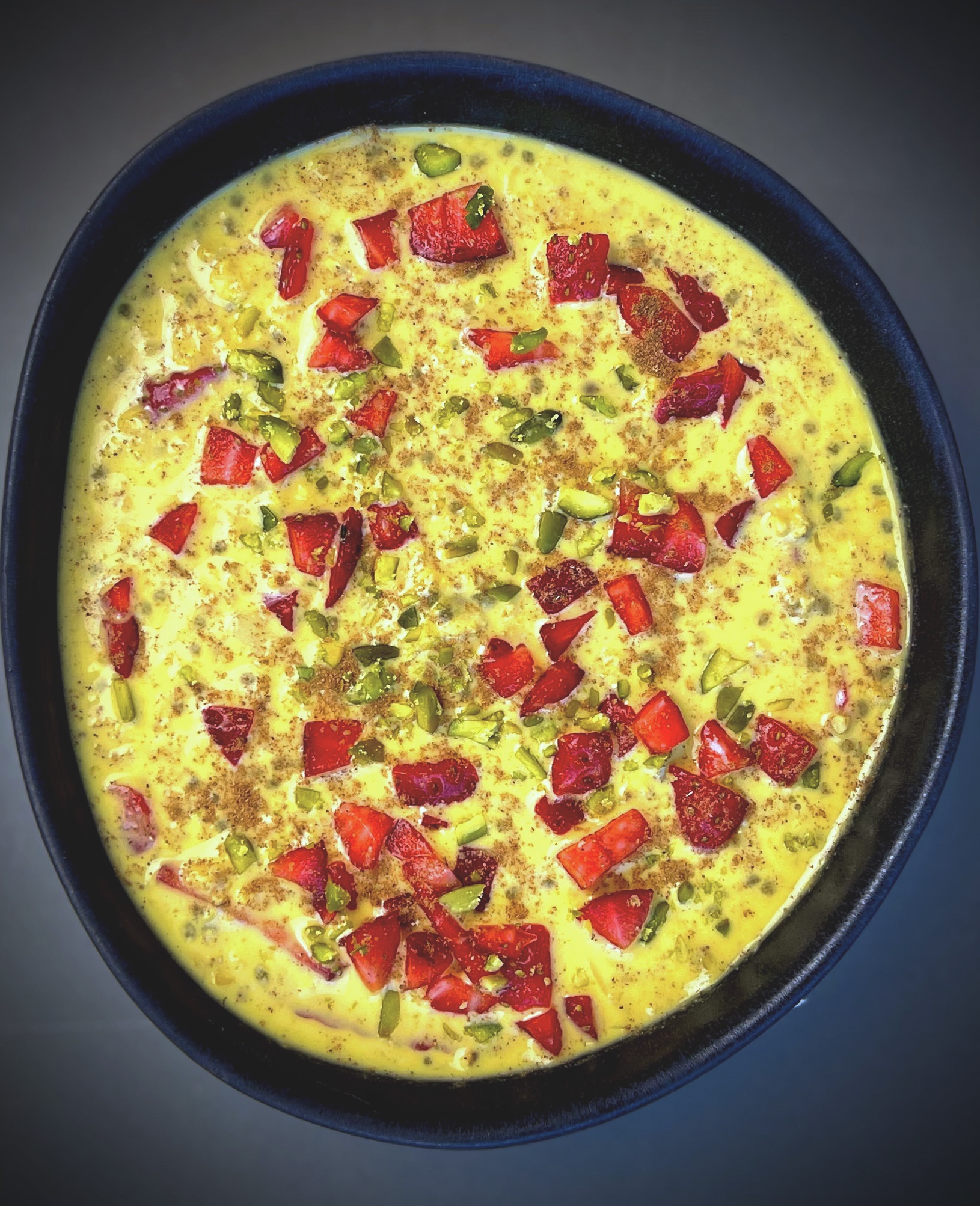

Sholeh Zard is a Persian rice pudding dessert flavoured with saffron, rose water, sugar and decorated with almonds, pistachio and cinnamon. It is a delicious and comforting dessert and loved by Iranians.
After a light bulb moment, I decided to experiment with the flavours of Sholeh Zard with the concept of overnight oats. Overnight oats have become very popular over the last decade. A quick, healthy and delicious way of preparing rolled oats. With no cooking required, it is prepared by mixing rolled oats, liquids and other ingredients and leaving them in the fridge overnight.
The process is simple. Soak oats and chia seeds in milk, Greek yogurt, saffron, rose water and honey. Leave in the fridge overnight. Add flaked almonds and some strawberries the next day and give it a good stir. Serve it in a bowl topped with more strawberries, crushed pistachios and a sprinkle of cinnamon. The resulting breakfast dish is fresh, light and delicious. My family love it and it is one of our regular breakfast options. It’s so low maintenance to knock up and washing up is easier than the mess cooked porridge creates!
I have included chia seeds in the recipe due to the nutritional benefits including adding fibre and protein. Feel free to leave them out if you are not a fan. You can also make this with non-dairy milk and yogurt and replace the honey with maple syrup if you are vegan. If you would prefer to substitute the honey / maple syrup with a wholesome way to sweeten the oats, then grate pear or apple into the oat mixture prior to leaving in the fridge overnight.


